The short version. Across the five SUVs in this guide, the Hyundai Kona Electric wins on value, the Tesla Model Y on proven track record, the BMW iX3 on long-distance charging, the Volvo EX60 on outright range, and the Kia EV9 on family space. The reassuring backdrop: a reliable electric SUV now breaks down around 2.5 times less often than an equivalent petrol or diesel model, 4.2 versus 10.4 breakdowns per 1,000 vehicles in the ADAC breakdown data. Prices here run from €36,850 to €75,500, and WLTP range from 514 to 810 km.
Below: the five at a glance, then each pick matched to a driver profile, the reliability data that backs the verdict, and the one weak point that catches most owners off guard.
The 5 reliable electric SUVs at a glance
Entry version for price, longest-range powertrain for WLTP range, maximum DC charging power. Sorted by the profile each one suits best.
| Model | Starting price | Max WLTP range | Max DC charging | 10-80% | Battery warranty |
| Hyundai Kona Electric | €36,850 | 514 km | 101 kW | 41 min | 8 yrs / 160,000 km |
| Tesla Model Y | €40,990 | 657 km | 250 kW | ≈ 25 min | 8 yrs / 192,000 km |
| BMW iX3 Neue Klasse | €64,550 | 805 km | 400 kW | 21 min | 8 yrs / 160,000 km |
| Volvo EX60 | €66,500 | 810 km | 370 kW | 18 min | 8 yrs / 160,000 km |
| Kia EV9 | €64,400 | 563 km | 230 kW | 24 min | 7 yrs / 150,000 km (battery + vehicle) |
How we ranked them. Six weighted criteria: objective reliability data (ADAC 2025, J.D. Power, What Car? Reliability), battery warranty scope, technical platform maturity, charging ecosystem quality, volume of owner feedback in France and Europe, and the price / reliability / range balance. If you want to vet a specific model yourself before signing, this guide to what to check before buying an electric car runs through the main checks.
Which one is right for you? The picks by driver profile
Best value: Hyundai Kona Electric
If your budget leads the decision, the Hyundai Kona Electric is the pick. Launched in late 2023 in its second generation (SX2), it plays the value-reliability-price champion in the compact segment. The 65.4 kWh version posts up to 514 km WLTP on 17-inch wheels (454 km on 19-inch) for 217 hp, with DC charging capped at 101 kW (10-80% in 41 minutes), slightly behind 800 V standards. The knockout argument is its proven reliability: Hyundai and Kia have topped the rankings for five years, with consistent build quality and a warranty of 8 years or 160,000 km on the battery, plus 5 years on the whole vehicle.
Starting price: €36,850 for the 156 hp / 48.4 kWh / 377 km WLTP version, up to €46,750 for the top Premium trim. Heat pump standard on the 65.4 kWh versions, regular OTA updates, optional V2L to power external devices through a 220 V socket in the boot (up to 3.6 kW). Boot of 466 litres, expanding to 1,300 litres with the seats folded.
Watch out for: DC charging at 101 kW looks tight against the 200-300 kW of 800 V rivals. If you cover a lot of motorway miles, the Hyundai Ioniq 5 (or its new EV4 cousin) fits better, though the Ioniq 5 hit ICCU trouble in the ADAC study, so check that software recalls were applied on any used example.
Best proven track record: Tesla Model Y
For the longest real-world history in the top 5, nothing beats the Tesla Model Y, the world’s best-selling electric SUV since 2023. The new Juniper generation, restyled in early 2025, sharpens aerodynamics and comfort without touching the proven mechanicals. A single rear motor, few moving parts, and batteries whose earliest units, delivered back in 2020, now clear more than 200,000 km without major failure. ADAC ranks it among the winners of its upper segment (0.9 breakdowns per 1,000 vehicles for the 2022 model year).
On the French configurator in spring 2026, the rear-wheel-drive version starts at €40,990 (534 km WLTP, 62 kWh LFP battery), the Long Range RWD climbs to €44,990 (657 km WLTP), and the Premium Long Range AWD reaches €52,990. A 7-seat variant is a €2,500 option on the Premium Long Range. Supercharger access stays a heavyweight argument: 250 kW peak, 10-80% in around 25 minutes. Battery warranty of 8 years or 192,000 km, with 70% capacity retention.
Watch out for: fit-and-finish flaws (panel alignment, interior plastics) keep surfacing in J.D. Power surveys. Mechanically it is solid; on perceived quality Tesla still trails the Koreans and Europeans. The Model Y RWD also rose €1,000 in early 2026 with no technical change.
Best for long-distance and fast charging: BMW iX3 Neue Klasse
If you live on the motorway, the BMW iX3 is built for you. Launched in September 2025, it introduces the Neue Klasse platform that will underpin 40 of the brand’s electric models by 2027. The start has been huge: more than 50,000 orders in six months in Europe. It was voted 2026 World Car of the Year and 2026 World Electric Vehicle of the Year (World Car Awards). The 50 xDrive develops 469 hp, carries a 108.7 kWh battery and posts 805 km WLTP. Charging peaks at 400 kW, the fastest here, meaning 10-80% in 21 minutes and up to 309 to 372 km recovered in 10 minutes.
Inside, the BMW Panoramic iDrive pairs a 17.9-inch central touchscreen with a 43-inch Panoramic Vision band projected along the base of the windscreen, replacing the instrument cluster. Bidirectional V2H is planned, with hands-free driving up to 130 km/h via the Highway Assistant. The iX3 50 xDrive starts at €71,950; a rear-drive 40 version (320 hp, 82.6 kWh usable, 635 km WLTP, 300 kW charging) arrives in summer 2026 at €64,550. Built in Debrecen (Hungary), battery warranty 8 years or 160,000 km.
Watch out for: a new platform means teething risks. BMW tends to move fast and debug on the go; early feedback is encouraging but the field track record is still thin. Wait until late 2026 if that worries you.
Best range and premium feel: Volvo EX60
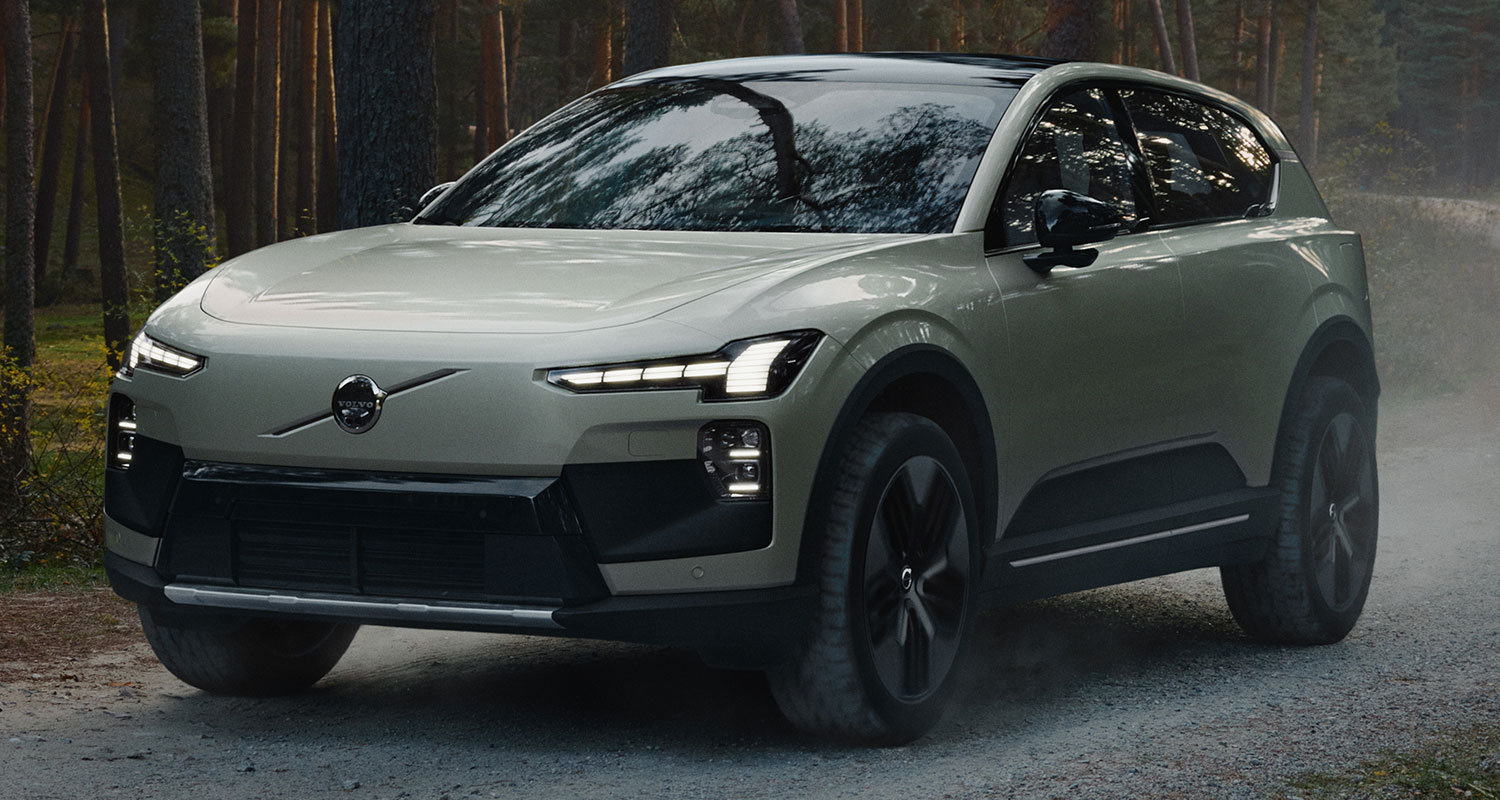
For outright range and Scandinavian premium, the Volvo EX60 sits at the top. The electric cousin of the XC60 (more than 2.7 million units sold) ushers in the SPA3 platform and 800 V architecture in 2026. Three powertrains: P6 RWD (374 hp, 80 kWh usable, 620 km WLTP), P10 AWD (510 hp, 91 kWh usable, 660 km WLTP), and the P12 AWD (680 hp, 112 kWh usable, 810 km WLTP, the brand’s record). The P10 and P12 accept 370 kW DC (320 kW for the P6): 18 minutes from 10 to 80%, and up to 340 km recovered in 10 minutes on a 400 kW charger.
On the Volvo France configurator, the EX60 P6 Plus starts at €66,500, the P10 AWD Plus at €69,500 and the P12 AWD Plus at €75,500; the Ultra trim adds around €6,900. Cell-to-body structure, NMC battery, warranty 8 years or 160,000 km. First French deliveries land September 2026 (P6, P10) and December 2026 (P12); the rugged Cross Country follows in the second half of 2027. To compare the wider line-up and choose an electric SUV from Volvo, there is also the EX30 (compact urban) and EX90 (large 7-seat family SUV).
Watch out for: SPA3 is brand new and the EX60 is its first model. Volvo’s reliability reputation is strong, but the field history is missing. Wait until late 2026 if you are very risk-averse.
Best for big families: Kia EV9
Need seven seats? The Kia EV9 is the only true family hauler of the five. Built on the 800 V Hyundai-Kia E-GMP platform (shared with Ioniq 5 and EV6), it runs five metres long with seven approved seats and a 2,500 kg towing capacity in AWD. The range spans the Air trim (76.1 kWh, 218 hp RWD, 443 km WLTP) to the GT (508 hp AWD, 4.6 s to 100 km/h, 510 km WLTP). The benchmark is the EV9 Earth (99.8 kWh, 204 hp RWD), topping out at 563 km WLTP.
Charging hits 230 kW DC (real peak in testing), 10-80% in 24 minutes on a 350 kW charger. Warranty of 7 years or 150,000 km on the battery AND the vehicle, rare in the segment. Pricing: €64,400 for the Air (76.1 kWh), €70,400 for the Air long range (99.8 kWh), €78,000 to €79,100 for the Earth, up to €97,100 for the GT.
Watch out for: at more than 2.3 tonnes the EV9 is thirsty on the motorway (27-30 kWh/100 km in real conditions). If you mostly drive in town, the Kia EV3 or Hyundai Kona Electric make more sense.
The data behind the verdict: what ADAC actually found
The headline comes down to two numbers: 4.2 versus 10.4 breakdowns per 1,000 vehicles, electric against combustion, on cars registered between 2020 and 2022, per the study ADAC published in April 2025. Europe’s largest motoring club scrutinised 159 models from 20 brands, drawing on 3.6 million callouts handled in 2024 by its “Yellow Angels”. A model needed at least 7,000 registrations over two years in Germany to qualify. The mechanical simplicity of an electric motor (one motor, no clutch, no gearbox, no particulate filter) sharply cuts the number of failure points.
The gap is wider still on the 2 to 4 year bracket: 9.4 breakdowns per 1,000 combustion cars against 3.8 for electric ones. The Tesla Model 3 leads with 0.5 per 1,000 on the 2022 model year. At the other end, the Hyundai Ioniq 5 takes the wooden spoon at 22.4, mostly from an ICCU fault, the module that manages charging. The takeaway: the segment is reliable, but the specific model still matters as much as the technology.
Key takeaway: an EV breaks down 2.5 times less often than a combustion car. But pick the model on its own record, not the segment average.
The weak point nobody warns you about: the 12 V battery
The surprise of the 2025 ADAC study: 50.5% of electric-vehicle breakdowns come not from the big lithium traction pack, but from the small 12 V auxiliary battery, the same one found under the bonnet of combustion cars (44.9% of their breakdowns). It is by far the leading cause of immobilisation, ahead of motor or high-voltage electronics issues (around 22%) and classic electrical faults like lighting or starters (10.6%).
Why it fails
On an electric SUV, the 12 V battery powers all the onboard electronics (infotainment, door opening, screens, sensors) and acts as the relay to wake the high-voltage system. It runs flat in two situations: when the car sits idle for a long time (two to three weeks is enough in winter), and when an electronic module stays awake after shutdown (a common software bug on young platforms). The result: a dead car and a tow truck, even with a full traction battery. Heavy use of smartphone apps (remote locking, scheduled climate) speeds up the drain.
How to avoid it
A few habits cover it. Never leave the vehicle more than 15 days without running it, especially in winter. Check the charge level through the manufacturer app (Tesla, Volvo and BMW show 12 V health in theirs). Replace the 12 V battery every 4 to 5 years rather than waiting for failure. And at the first weak signal, odd flickering at start-up or a screen slow to wake, visit the dealer before it worsens. Replacement usually costs €100 to €250 fitted.
Key takeaway: around half of EV breakdowns trace to the 12 V battery. Don’t leave the car idle past 15 days, and replace it every 4 to 5 years.
WLTP vs real-world range: what to actually expect
WLTP range is measured on a bench at a mild 23°C with a mixed city/road cycle. In real conditions, expect a meaningful gap.
| Conditions | % of WLTP range | Example on 600 km WLTP |
| Summer, mixed, gentle driving | 85 to 95% | 510 to 570 km |
| Summer, motorway at 130 km/h | 65 to 75% | 390 to 450 km |
| Winter at 0°C, mixed | 70 to 80% | 420 to 480 km |
| Winter at -10°C, motorway | 55 to 65% | 330 to 390 km |
Three levers limit the damage: the heat pump (standard on the models here, optional on the Kia EV9 Air), preconditioning the battery before a fast charger, and a steady 110-120 km/h rather than 130 on the motorway. On a long trip, that typically saves 10 minutes per charging stop.
What it costs to run in 2026
Purchase incentives in France
The ecological bonus disappeared in July 2025, replaced by the CEE “coup de pouce” (Energy Savings Certificates). It can reach €4,200 for the lowest-income households in 2026, if the vehicle qualifies (sale price under €47,000, minimum environmental score). In practice: the Hyundai Kona Electric and Tesla Model Y RWD are eligible; the BMW iX3, Volvo EX60 and Kia EV9 are not in their standard versions.
The social leasing scheme returned in 2026 at €100 to €200 a month depending on income, for eligible European-built models. The Hyundai Kona Electric (assembled in Czechia) qualifies under the 2026 criteria.
Charging: the real cost
At home on off-peak hours (EDF Tarif Bleu, around €0.17/kWh), a “fill-up” of a 65 kWh battery comes to €11 for 500 km. On motorway fast charging, reckon on €0.49 to €0.69/kWh (Ionity, Electra, Allego, TotalEnergies), so €35 to €50 for the same battery. Home charging is three to five times cheaper than fast charging, so a home or workplace charging point is what makes an EV pay off.
Maintenance and insurance
Annual maintenance runs two to three times cheaper than an equivalent combustion SUV: no oil change, no belt, brake pads lasting 80,000 to 100,000 km thanks to regenerative braking. Watch the battery coolant, cabin filter, tyres (which wear faster from instant torque and weight) and the 12 V battery above. Budget €200 to €350 a year at the dealer, against €500 to €800 for a premium combustion model. On insurance, EVs cost 10 to 25% more in 2026, mostly from repair costs; get several quotes, since some insurers (MAIF, Macif, GMF) offer dedicated EV cover.
Before you sign: the buyer’s checklist
Five checks settle most of the reliability question on a given model.
- Battery health. On a used car, insist on an SOH (State of Health) certificate. Above 90% is reassuring; below 80% before six years, walk away.
- Warranty depth. 8 years or 160,000 km on the battery is now standard, with a 70% capacity floor. Kia covers the whole vehicle for 7 years, which is rarer.
- Platform and charging. 800 V platforms (BMW Neue Klasse, Volvo SPA3, Hyundai-Kia E-GMP) charge twice as fast as 400 V and run cooler, which spares battery life.
- Software and recalls. Check that OTA updates are current and that any recalls (the Ioniq 5 ICCU, for one) were applied. Tesla, BMW and Volvo lead on remote updates; Hyundai and Kia have closed the gap since 2023.
- Owner feedback. D. Power, Consumer Reports and the What Car? Reliability 2025 barometer (90.4% average for EVs, up 2.7 points) point to clear trends, even if the US data is not the French market.
Key takeaway: warranty and battery health first, then platform, software and the weight of owner feedback.
Your frequently asked questions
Which electric SUV should you choose in 2026?
For urban and suburban use: the Hyundai Kona Electric. For the large family: the Kia EV9. For relaxed long trips: the BMW iX3 50 xDrive or the Volvo EX60 P12. For the densest charging ecosystem in France: the Tesla Model Y.
Which electric SUV has the longest range?
The Volvo EX60 P12 AWD at 810 km WLTP, just ahead of the BMW iX3 50 xDrive (805 km). Both use 800 V architecture and a battery over 100 kWh. The Tesla Model Y Long Range RWD follows at 657 km WLTP, for noticeably less money.
Should you buy new or used?
Used makes sense on Tesla Model Y and Hyundai Kona Electric models over three years old, whose reliability is now documented. Always require a battery health certificate (SOH at or above 90%) and check the software-update and recall history. On very recent models (Volvo EX60, BMW iX3 Neue Klasse), new is safer while the track record is missing.
Which brand is the most reliable?
Per the latest ADAC and J.D. Power studies, the Hyundai-Kia pairing dominates on compacts (bar the Ioniq 5 and its ICCU fault). Tesla is the mechanical benchmark despite fit-and-finish issues. Volvo and BMW offer the strongest premium warranties, 8 years or 160,000 km on the battery. In France, Hyundai and Tesla together hold the largest pool of owner feedback.
What does an electric SUV really cost per km?
In mixed use with mostly off-peak home charging, reckon €2 to €4 per 100 km in energy, against €8 to €12 for an equivalent combustion SUV. Charging mostly at fast chargers narrows it sharply, to €8 to €14 per 100 km, the same as a combustion model. Payback depends largely on home or workplace charging access.
How long does the battery last?
On modern models (since 2020), field feedback (notably Tesla Model Y units from 2020) shows typical degradation of 10 to 15% after 200,000 km. Manufacturers guarantee at least 70% residual capacity after 8 years or 160,000 km. In practice, count on 12 to 15 years before a replacement becomes worthwhile.
Glossary: the spec-sheet terms, decoded
The acronyms and terms that recur on an electric SUV’s spec sheet. Use it as a reference for the sections above.
| WLTP | Worldwide Harmonised Light Vehicles Test Procedure. The European standard for range and consumption. More realistic than the old NEDC, but still optimistic: expect 15 to 25% less in real use. |
| Usable kWh | The capacity you can actually tap, versus gross capacity. Makers keep a 5 to 8% buffer to preserve cell longevity. |
| 800 V architecture | The high-voltage network’s operating voltage. Faster charging and less heat than 400 V. Standard on Hyundai/Kia E-GMP, BMW Neue Klasse and Volvo SPA3. |
| LFP / NMC | Two chemistries. LFP (lithium iron phosphate): durable, safe, less dense, cheaper. NMC (nickel manganese cobalt): denser, better range, pricier. |
| OTA | Over-the-air. Remote software updates, no dealer trip. Tesla, BMW and Volvo stand out. |
| V2L / V2H / V2G | Vehicle-to-Load (power a device from an onboard socket), Vehicle-to-Home (power your house), Vehicle-to-Grid (feed the grid). The car becomes a battery on wheels. |
| Heat pump | Heating that recovers warmth from ambient air or the car’s electronics. A real asset in winter: it preserves up to 30% of range versus a resistive heater. |
| Cell-to-body / Cell-to-pack | Battery design with cells built into the structure (or pack), no intermediate modules. Saves weight and space, adds rigidity. |
| Preconditioning | The car brings the battery to its ideal temperature before a fast charger, to reach full charging power. Trigger it via the route planner. |
| ICCU | Integrated Charging Control Unit. Handles AC/DC charging and the 12 V battery. Source of several Hyundai-Kia recalls. |
| 10-80% | The reference window for fast charging. Past 80%, power drops sharply to protect the battery, the slowest stretch at a station. |
Sources and verification method
Figures and prices verified on the official configurators (Tesla.com/fr, Volvocars.com/fr, Hyundai.com/fr, BMW.fr, Kia.com/fr) and against specialist press (L’Argus, Automobile Propre) in spring 2026. The reliability study cited is the ADAC Pannenstatistik 2025, published April 2025 (2024 data). Prices vary with promotions, options and incentives. Article updated May 2026.