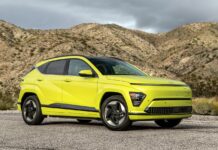

Over the past five years, the automotive industry has seen electrification move beyond propulsion systems and rapidly expand into auxiliary systems. Components such as electric coolant pumps, electric brake boosters, electric power steering (EPS), HVAC blowers, thermal management pumps, and active aerodynamic actuators are shifting away from belt-driven or hydraulic mechanisms toward fully electronic and motor-driven designs.
As vehicle platforms become more efficient, more compact, and more software-defined, these auxiliary systems now demand:
- Higher overall energy efficiency
- Stronger low-speed torque and better load-handling
- Faster dynamic response
- Lower noise and vibration
- Higher thermal stability and reliability
- Reduced maintenance and longer service life
Naturally, these requirements place greater emphasis on critical components such as the battery, controller, thermal management, and especially the electric motor—now a central performance determinant rather than a simple accessory.
Among the various motor technologies, high-torque BLDC (Brushless DC) motors have become a core technical route for modern automotive auxiliary systems, replacing less efficient or thermally unstable legacy motors.
Why Motor Selection Now Matters More Than Ever
As auxiliary systems transition from mechanical to fully electronic operation, choosing the correct BLDC motor directly affects:
- Thermal performance
- System responsiveness
- Efficiency and energy consumption
- NVH characteristics
- Reliability and safety
This makes BLDC motor selection a strategic engineering decision—not merely a specification choice. In this context, understanding how to select a high-torque BLDC motor becomes essential for any automotive auxiliary system.
How to Choose a High-Torque BLDC Motor
Electrification in modern vehicles has expanded rapidly into auxiliary systems. Components such as coolant pumps, brake boosters, EPS units, HVAC blowers, and active aerodynamic actuators now rely on electric motors whose performance directly affects efficiency, comfort, and safety. For buyers evaluating high-torque BLDC motors, the key is to understand what the system must achieve rather than focusing on deep engineering formulas.
1. Clarify What the System Needs to Deliver
Each auxiliary system places different demands on the motor. Identifying these expectations helps narrow down the right motor category.
- Continuous operation or short-burst operation
- Need for fast reaction time
- Sensitivity to noise and vibration
- Exposure to high heat or harsh environments
- Space limitations for installation
- Requirements for smooth low-speed torque or consistent mid-speed operation
These factors determine whether a system requires high torque, high efficiency, rapid response, or compact design.
2. Key High-Torque Motor Specifications That Matter to Buyers
While motor datasheets can be technical, the following parameters are the most relevant for consumers and system integrators.
- Continuous torque: The motor’s ability to maintain steady performance over long operation.
- Peak torque: Needed for sudden movements, start-up loads, or emergency assist functions.
- Rated speed: Ensures compatibility with the operating speed of pumps, blowers, or actuators.
- Efficiency: Impacts energy consumption, heat generation, and overall system longevity.
- Thermal capability: Determines whether the motor can operate reliably in high-temperature zones.
- IP rating and certifications: Important for systems exposed to water, dust, or engine-bay conditions.
- Motor size and mounting fit: Critical for compact engine compartments or integrated modules.
These seven specifications give a realistic picture of motor suitability without requiring engineering-level analysis.
Automotive auxiliary systems are subject to specific regulatory and safety requirements. Buyers should confirm whether the motor platform complies with relevant standards such as ISO 26262 (functional safety), IP ratings for environmental exposure, and material regulations like RoHS or REACH.
Compliance ensures the high-torque BLDC motor can be used in global markets without risking certification delays or redesign.
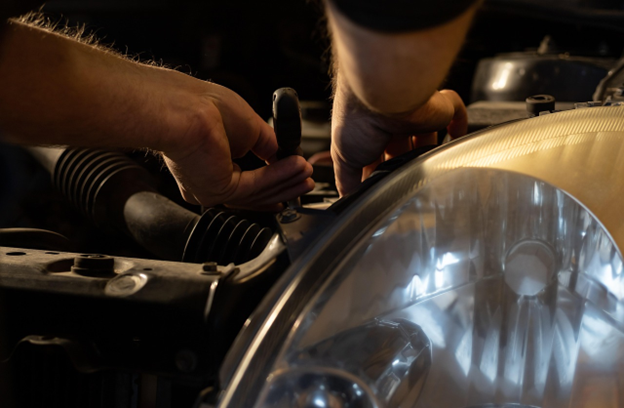
3. Matching Motor Types to Common Automotive Auxiliary Systems
The table below summarizes how different auxiliary systems map to the BLDC motor characteristics they need.
| Auxiliary System | BLDC Motor Requirements |
| Coolant pump | Medium continuous torque, strong thermal endurance, steady mid-speed operation |
| Brake booster | High peak torque, rapid response time, safety-rated design |
| Electric power steering (EPS) | Smooth low-speed torque, high reliability, long service life |
| HVAC blower | High efficiency, low noise, stable airflow control |
| Thermal management pump | Durability under long operating cycles, corrosion-resistant construction |
| Active aerodynamic actuators | Compact form factor, high low-speed torque, accurate positional control |
This functional mapping helps buyers understand why different systems require motors with distinct characteristics.
4. Quick Motor Specification Guide for Automotive Auxiliary Systems
After understanding the performance demands of each auxiliary system, many buyers naturally move to a more practical question:
“So what voltage and power range do these systems typically use?”
While requirements vary by OEM and vehicle class, the industry follows several common sizing patterns. The table below provides a quick reference to help narrow down the appropriate motor category for your project.
| Auxiliary System | Typical Voltage | Typical Power Range |
| Coolant pump | 12V / 24V | 30–120 W |
| HVAC blower | 12V / 24V | 50–300 W |
| Brake booster | 24V / 48V | 200–800 W |
| Electric power steering (EPS) | 24V / 48V | 300–1000 W |
| Thermal management pump | 24V | 60–200 W |
| Active aerodynamic actuators | 12V / 24V | 20–80 W |
These voltage and power ranges are not strict design limits, but rather typical values observed across mainstream passenger and commercial vehicle platforms. Their purpose is to provide buyers with a realistic sizing baseline—helping avoid overspecifying a motor (which increases cost) or selecting one that lacks sufficient thermal or torque capability. Once the approximate range is identified, buyers can refine their selection by evaluating torque, thermal performance, form factor, and integration constraints to arrive at the optimal fit.
5. Practical Evaluation Checklist for Buyers
To simplify motor selection, consider the following practical questions:
- Does the motor provide enough continuous torque for the system’s longest operating periods?
- Is the peak torque sufficient for sudden or emergency loads?
- Can the motor withstand the heat, vibration, and humidity found in automotive environments?
- Does its physical size match the available mounting space?
- Is the efficiency high enough to minimize energy loss and heat buildup?
- Does the manufacturer provide reliable documentation and system compatibility guidance?
These questions help avoid choosing a motor that is either under-specified or over-engineered for the intended application.
Beyond the upfront motor price, buyers should evaluate the total cost of ownership. Higher-efficiency BLDC motors can reduce long-term energy consumption for pumps and blowers that operate continuously. Motors designed with higher-grade bearings and insulation also help reduce warranty risks and unplanned downtime.
Additionally, integrated motor–controller assemblies may significantly lower installation, wiring, and maintenance costs compared with separate components.
Supplier & Integration Considerations
When evaluating suppliers, request comprehensive datasheets that include mechanical drawings, torque–speed curves, thermal characteristics, and electrical constants. Leading suppliers, such as Brushless Inc., also pair these datasheets with online selection tools and thermal simulation models, allowing engineers to predict system-level performance early in the design phase.
It is equally important to verify controller compatibility. Confirm whether the supplier provides or recommends a matching ESC, and whether communication protocols such as CAN FD are open and straightforward to integrate.
Example High-Torque BLDC Motors
Although many BLDC motor manufacturers have high-torque versions, the following are things to consider when making product-specific decisions:
Units with sensored feedback (Hall sensors or encoders) for precise control
Models rated for harsh environments (IP-rated, automotive-grade insulation)
Certified or supplied by reliable vendors with good documentation
Motors with low Kv (e.g., < 100 RPM/V), higher current ratings, and robust thermal design
Conclusion
Selecting a high-torque BLDC motor for an automotive auxiliary system is ultimately a system-level decision. Rather than focusing on isolated specifications, the real priority is understanding how the motor behaves within the full operating environment—its load cycles, thermal limits, and integration with the controller and vehicle architecture.
As highlighted in Brushless Inc.’s technical white paper on system-level electrification, “the future advantage comes not from having the most powerful motor, but from having the motor that understands the system.” This perspective reflects a broader industry movement toward integrated design, where the motor, controller, cooling strategy, and load profile are treated as one coordinated architecture.
By adopting this systems-thinking approach, OEMs and developers can build auxiliary systems that not only meet performance requirements but also strengthen overall vehicle efficiency, durability, and intelligent operation.