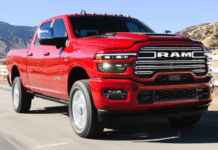

Walk into any diesel enthusiast forum in 2026, and you’ll see it immediately—DPF delete kits are everywhere. Not because they’re new, but because older diesel trucks keep aging and the repair bills keep climbing.
The data tells the story: aftermarket solutions for emissions-related failures are booming as vehicles push past the 100,000-mile mark.
Important Disclaimer: Everything discussed here applies only to off-road racing, dedicated track vehicles, farm equipment, and non-street-use applications. DPF deletion on road-driven vehicles violates the Clean Air Act and carries severe penalties. This is informational content for properly licensed off-road use only.
The Economic Impact of DPF Failure
To understand why demand for DPF solutions is surging, you need to understand the financial reality owners face when these systems fail.
High Replacement Costs
A factory DPF isn’t just a filter. It’s a precision device packed with platinum and palladium—expensive metals that make replacement costs brutal.
A new DPF system costs $2,500 to $6,000 at most dealerships. Add in labor, sensors, and DEF fluid system work, and you’re easily hitting $3,000 to $7,000 out of pocket.
Here’s where it gets real: a 2014 Ram 2500 Cummins might be worth $20,000 in 2026. A DPF replacement at $5,000 represents 25% of the truck’s entire value.
For working trucks that tow or haul, this isn’t a minor repair—it’s a financial crisis. That’s why owners start looking at permanent DPF deleting solutions instead. Check the DPF delete here.
The “Limp Mode” Problem
Modern diesels are engineered to protect themselves. When a DPF gets so clogged with soot that passive regeneration cycles can’t burn it all off, the engine computer immediately activates limp mode. The truck derates itself—sometimes down to 5 mph.
For a racing truck or off-road vehicle, this is a complete performance loss. A Powerstroke that suddenly limits power output mid-race is worthless. Forum users report that limp mode can hit at the worst possible times: mid-tow, on a trail, during competition.
The stock system treats the truck as if it’s broken because it is, by the system’s logic. Delete kits bypass these fail-safes entirely, allowing race vehicles to maintain consistent power delivery throughout extended operation.
The Regeneration Fuel Waste
Active regeneration burns fuel just to clean the filter. That fuel does nothing to move the truck forward. Real-world testing shows that stock trucks waste 1 to 2 MPG just on regeneration cycles, particularly on short trips and in city driving.
For off-road racing, where fuel management matters for endurance events, this is dead weight. Removing the DPF eliminates this parasitic fuel consumption.
Why Demand for DPF Delete Kits is Surging
The push to “diesel DPF delete” isn’t just about power; for many, it is an economic calculation driven by the following factors:
Fuel Efficiency Gains
One of the most immediate benefits of installing a DPF delete kit here is the improvement in fuel economy. With a stock setup, the engine has to operate against the high-pressure that the DPF generates.
Furthermore, the active regeneration process consumes additional fuel by injecting it into the exhaust stream to burn off accumulated soot. This fuel provides no forward momentum, effectively wasting energy that could have been used to power the vehicle.
Removing the DPF eliminates this parasitic fuel consumption and the exhaust backpressure, allowing the engine to breathe more easily and the turbocharger to operate more efficiently.
Real-world data from 6.7 Powerstroke users shows highway fuel economy improves from 15-18 MPG stock to 18-22 MPG deleted. The 2-4 MPG gain isn’t dramatic, but it’s consistent.
One forum user hand-calculated multiple fuel tanks on his deleted 2015 F-350. Stock highway numbers: 16-17 MPG. After deleting and proper tuning: 20-21 MPG. On a 50,000-mile annual driving pattern, that’s a difference between 3,125 and 2,381 gallons burned—real savings that accelerate in endurance racing scenarios.
Long-Term Reliability
Emissions components like the DPF and EGR (Exhaust Gas Recirculation) can lead to carbon buildup in the intake and increased oil dilution. When the DPF is clogged, it causes overheating in the turbocharger and the exhaust manifold.
One deleted truck owner reported that his exhaust gas temperatures dropped 200 degrees after removing the DPF. Eventually, this retained heat may cause damage to turbo seals and can even break exhaust manifolds.
Cooler engines last longer. That’s not debatable—it’s thermodynamics. For race vehicles that see sustained high RPMs and aggressive throttle work, thermal management directly impacts reliability. Without the DPF forcing exhaust backpressure and triggering regeneration events, the engine runs more efficiently and stays in a safer temperature band.
Technical Reliability vs. Environmental Compliance
The decision to remove a DPF presents a stark conflict between technical reliability and legal compliance.
On one hand, eliminating the emissions equipment undoubtedly simplifies the engine, enhancing power and reliability. It removes dozens of potential failure points, from clogged filters to faulty sensors.
The engine becomes more straightforward, more predictable. For dedicated racing applications, this simplification creates a more reliable platform. Race teams have reported fewer DNFs (did not finish) after delete installations because there’s simply less to fail mid-event.
On the other hand, it is critical to understand the legal ramifications. In most jurisdictions, including the United States, removing or tampering with emissions control devices on a vehicle driven on public roads is a violation of the Clean Air Act.
Removing emissions equipment on any vehicle operated on public roads is a federal violation with penalties often exceeding $10,000 per instance. States with strict emissions testing—California, Colorado, New York—conduct random roadside inspections.
Dealership scanners will detect deleted trucks instantly; even reinstalling stock parts after deletion doesn’t erase ECU logs.
Reputable manufacturers market these kits explicitly for “off-road use only,” such as in dedicated race vehicles or farm equipment not operated on public highways. This designation places the full burden of legal compliance squarely on the owner. Therefore, for any owner who operates their vehicle on public roads, the legal risks far outweigh any perceived gains in reliability.
The Future of the Aftermarket Diesel Industry
As manufacturers push for even stricter emissions standards (such as the upcoming CARB 2028 regulations), the gap between the increasing complexity of factory-installed systems and the desire for long-term reliability among owners will only widen. This presents a significant opportunity for the aftermarket.
The companies that can offer solutions to ageing diesel have their future. The contemporary diesel performance shop has ceased to be a mere destination to get hot rod music and smoke tunes.
They have become critical service providers to owners, who do not wish to take their trucks off the road due to the bankruptcy of the dealership services. These stores have the skill required to adjust the ECM correctly after the hardware has been disassembled, to ensure that the car runs smoothly (in the case of an off-road vehicle) and economically.
Conclusion: A Data-Driven Decision for Diesel Owners
The rising demand for DPF delete kits is not merely a fad; it is a data-driven response to the significant economic pressures faced by owners of aging diesel vehicles. A $5,000 repair bill for a 10-year-old truck will often suggest a long-term solution rather than a short-term one.
By removing the restrictive DPF system, owners unlock the true potential of their diesel engines: better fuel economy, lower operating temperatures, and the peace of mind that comes from knowing the truck won’t leave them stranded.
A deleted 6.7 Cummins from a reputable manufacturer with quality tuning will produce 50+ horsepower gains. A Powerstroke will gain 2-4 MPG. A Ram 2500 will run 100+ degrees cooler. These aren’t theoretical numbers—they’re what thousands of racers have documented across forums and dyno sessions.
The financial math works, especially for high-mileage racers. A $2,500 delete kit investment pays for itself in fuel savings alone over a racing season. More importantly, it removes an entire category of failure points that could cause race-ending shutdowns.
Critical Reminder: This article addresses off-road racing applications exclusively. DPF delete kits must never be installed on public-road vehicles. Federal penalties are severe. This content is for informational purposes regarding legal off-road use only.