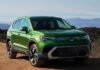
Danish Car Market in 2026 reports major gains. YTD sales up to April rose by 15%, with Toyota surging and taking Volkswagen’s place into 1st. Tesla surged 55.4% back into the top 10 and climbed EV rankings, capitalizing on sector’s momentum.
Economic Environment
The 2026 outlook for Denmark projects GDP growth of about 2.0%, inflation around 1.1%, and unemployment near 6.4%, indicating moderate but stable economic expansion. Growth is expected to slow from 3.5% in 2024 and 2.4% in 2025 as external demand weakens and global trade tensions persist. The Danish economy has recently operated at “two speeds,” with strong performance from large multinational exporters, especially pharmaceuticals, while domestic demand and investment remained subdued. High interest rates, housing market corrections, and cautious household spending have dampened activity in the domestic economy despite strong employment and rising real wages.
Over the medium term, lower interest rates and tax cuts should gradually strengthen consumption and domestic demand. Denmark maintains strong public finances with low public debt and budget surpluses, but long-term pressures from population ageing, climate investment, and increased defence spending could strain fiscal sustainability. Productivity growth and domestic business investment remain structural challenges despite Denmark’s high living standards and low inequality.
Automotive Industry Trend and Outlook
Building on the positive performance of 2025, the danish car market started the year off strong in 2026. Overall, YTD sales up to April surged by 15%, totalling 60,457 units sold.
Brand-wise, Toyota -up 1 spot- became the new leader, up 1 spot and 62% with a 11.3% share. Skoda -up 1 spot- emerged in 2nd, growing 4 spots and 68.1% while securing a 11.1% share. Volkswagen -down 2 spots- closed the podium with 10.1% (-32.1%).
BMW ranked 4th, up 3 spots (+26.6%), followed by Mercedes in 5th (+7.6%) and Audi -down 2 spots- in 6th (-5%).
Renault gained 4 spots in 7th (+90.2%), followed by Cupra -down 2 spots- in 8th (-20.9%) and by Tesla in 9th -up 3 spots- (+55.4%).
Peugeot surged 6 spots into 10th while gaining 84.4%.
Looking at specific models, reported in the dedicated article, the Toyota bZ4X impressively secured 1st, followed by the Skoda Elroq which reported impressive growth and climbed 3 spots in 2nd.
EV Market Trend and Outlook
Car sales momentum favours EV adoption in Denmark, with EV sales surging by 28.9% up to April 2026. With one of the highest share on the total worldwide, the government continues to support the transition by allocating funds to introduce zero-emission trucks and support the charging network.
Volkswagen led with 17% of the sector despite losing 19.8%. Skoda ranked 2nd, up by 85.1% while Toyota gained 2 spots and 90.1% in 3rd. Tesla secured 7.4% while growing 55.4% while BMW ranked 5th growing by 5.2%.
Medium-Term Market Trend
Over the past decade, Denmark’s car market has gone through two main phases. Between 2014 and 2016, sales expanded steadily, rising from 189,048 units in 2014 to a then-record 223,143 in 2016 (+7.6%). This momentum reversed in 2017, starting a multi-year decline that was briefly interrupted in 2019, when registrations increased 3.2% to a new peak of 225,548. The downturn deepened during the COVID-19 pandemic in 2020, when sales fell 12.1% to 198,153 units, followed by further drops in 2021 (-6.4%) and 2022 (-20%) amid global supply chain disruptions and the microchip shortage, alongside policy shifts encouraging electric vehicles (EVs).
The market began recovering in 2023 with a 16.5% rebound to 172,759 units and then stabilized in 2024, growing 0.5% to 173,747 units, before accelerating 6.9% to 185,741 in 2025. Over the same period, EV adoption surged dramatically. After fluctuating between roughly 1,000 and 4,000 annual sales in the early 2010s, EV demand accelerated strongly from 2020 onward. Sales reached 70,390 units in 2024 (+36.8%) and climbed further to 102,385 in 2025 (+45.5%), driven by favorable tax policies for zero-emission vehicles, broader model availability, stronger consumer confidence, and the rapid expansion of charging infrastructure, particularly fast-charging networks.
Tables with sales figures
In the tables below we report sales for all Brands, top 10 Manufacturers Group, and Top 10 models.
This content is for members only.
Login Join Now