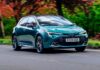
German Auto Market in 2026 continues to expand. YTD sales up to April grew by 4.6%, with Skoda surging by 21.2% and outpacing Mercedes which stagnated. EV share reached 16.8%, with Tesla and BYD competing for a spot on the podium.
Economic Environment
2026 forecasts point to German GDP growth of 1.1%, up from an estimated 0.3% in 2025, with roughly half of that improvement expected to come from expansionary fiscal policy that lifts domestic demand. This would mark a meaningful break from the country’s long stagnation since 2018 and place growth above Goldman Sachs’ estimate of Germany’s potential growth rate of about 0.5%. The main driver is a shift in fiscal policy after several years of drag, supported by looser debt-brake rules, higher public spending, subsidies, social transfers, and tax cuts. As a result, Germany’s fiscal deficit is projected to widen to 3.7% in 2026 and 3.9% in 2027, an unusually high level outside a recession. Markets are expected to reflect this shift, with higher bund yields and stronger prospects for domestically oriented and defense-related equities. More broadly, the report suggests Germany’s near-term recovery is being powered more by policy stimulus than by a structural improvement in the economy’s underlying growth capacity.
Manufacturing, which has weighed on growth for years, is showing signs of stabilization as domestic orders and industrial production improve, especially with stronger consumption, investment, and defense spending. However, export performance remains weak relative to foreign demand, with Chinese competition continuing to erode Germany’s market share and restrain external growth. The report also highlights longer-term macroeconomic constraints, especially aging-driven labor shortages, weak productivity growth, and limited investment momentum, which keep Germany’s potential growth low relative to other large EU economies. In that sense, the expected rebound looks cyclical and policy-led rather than transformative, unless deeper reforms materially improve competitiveness, labor supply, and productivity.
Automotive Industry Trend and Outlook
After starting 2026 on a negative note, Germany’s car sales turned positive towards the end of Q1. The trend continued april, with YTD sales reaching 944,778 units (+4.6%).
Germany’s automotive sector improved outlook was driven by stronger demand, especially for electric vehicles, and rising export expectations, despite slightly weaker future outlooks.
Brand-wise, Volkswagen was still the leader with a 18.7% share (-5.7%), followed by Skoda -up 2 spots- with a share of 8.9% (+21.2%), Mercedes -down 1 spot- with 8.7% (-0.5%) and BMW -down 1 spot- (+5.6%).
Audi ranked 5th (+10%), followed by Opel in 6th (+28.5%), Hyundai -up 3 spots- in 7th (+13.9%) and Ford -down 1 spot- in 8th (-10.4%)
Seat -down 1 spot- ranked 9th (-1.3%), followed by Fiat -up 7 spots which closed the top 10 (+35.5%).
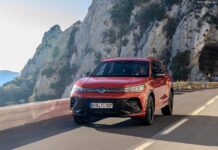
Looking at specific models, for which there is a specific article dedicated, the Volkswagen Golf was still the best seller growing by 1.6% in year-on-year sales, followed by the Volkswagen Tiguan, down by 23.5%.
EV Market Trend and Outlook
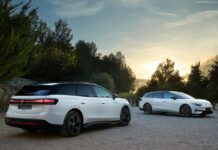
Germany’s EV Segment continues to expand steadily, growing 36.3% up to April 2026 to a 16.8% share. The government continues to back its EV commitment with a new incentive programs to which about €3 billion were allocated.
Volkswagen led with a 20.5% share despite losing 7%. Skoda followed in 2nd with 15.2% (+78.7%). Tesla ranked 3rd with 10.1% (+174.5%) while BYD followed close behind in 4th with 8.7% and surging by 397.1%.
Medium-Term Market Trend
Germany’s car market, Europe’s largest, has seen sharp swings over the past decade. From 2014 to 2019, sales rose 18.71%, reaching a decade high of 3.6 million units in 2019.
The market then reversed in 2020, when COVID-19 drove a 19.18% decline and pushed sales back below 3 million. The downturn continued with a further 10% drop in 2021 and stagnation in 2022, as factory shutdowns, supply-chain disruptions, layoffs, and weaker consumer demand weighed on the industry.
Government support helped trigger a temporary rebound in 2023, with sales up 7.48%, but recovery remained fragile. Higher input costs and stronger competition limited momentum, leading to a 0.8% decline in 2024. In 2025, the market stayed weak at 2.845 million units sold, and the annual growth rate from 2015 to 2025 was -11.1%.
EVs benefited from policy support, with automakers like Volkswagen and BMW accelerating electrification. But after five years of steady growth, EV sales fell 15.9% in 2024 following subsidy cuts, showing the segment still depends heavily on government incentives.
Tables with sales figures
In the tables below we report sales for all Brands, top 10 Manufacturers Group and top 10 Models.
This content is for members only.
Login Join Now