Italian Car Market in 2025 shrinks steadily. Full-year sales fell 2.1% with Renault suffering the most among leading brands. Fiat secured top spot despite overall flat growth trend; still, it showed great EV momentum, overtaking Tesla and moving closer to leader BYD.
Economic Environment
Italy’s economic outlook for 2025–2026 points to modest but improving growth, with GDP projected to rise by 0.5% in 2025 and 0.8% in 2026, following 0.7% growth in 2024. Expansion will be driven entirely by domestic demand, contributing about +1.1 percentage points in both years, while net foreign demand is expected to weigh on growth by −0.6 points in 2025 and −0.2 points in 2026. Private consumption is forecast to increase by 0.8% in 2025 and 0.9% in 2026, supported by rising wages and employment, while investment is set to strengthen significantly, growing by 2.8% and 2.7% respectively, largely due to NRRP-funded projects. The labour market remains resilient, with employment growing faster than GDP (+1.3% in 2025 and +0.9% in 2026) and the unemployment rate edging down to 6.2% in 2025 and 6.1% in 2026.
Inflation in Italy continues to decelerate and remains well below the euro area average, with HICP inflation projected at 1.6% in 2025 and easing further in 2026 as energy prices fall and demand stays moderate. The household consumption deflator is expected to rise by 1.7% in 2025 and slow to 1.4% in 2026, supporting real income growth without generating price pressures. Externally, Italy is forecast to maintain a positive trade balance of around 2.2% of GDP in 2025, improving to 2.4% in 2026, despite imports growing faster than exports. This outlook is shaped by a global environment of resilient but slowing growth, with world GDP expanding by about 3.1% in both 2025 and 2026 and global trade growth decelerating to 2.8% and 2.1%, respectively.
Automotive Industry Trend and Outlook
Italy’s passenger car market downturn continues in 2025 after negative performance in 2024. After sharper losses in the early months, the year-on-year variation halted around -1%/-2% to reach full-year sales of 1,525 million units, down by 2.1%.
Brand-wise, the market leader Fiat continues to struggle, as flat growth suggests that soon we might see a new market leader. It reported a share of 9.4% on the total.
Toyota followed in 2nd with a 7.9% share (-1.8%) while Volkswagen ranked 3rd with 7.3% (-7.6%).
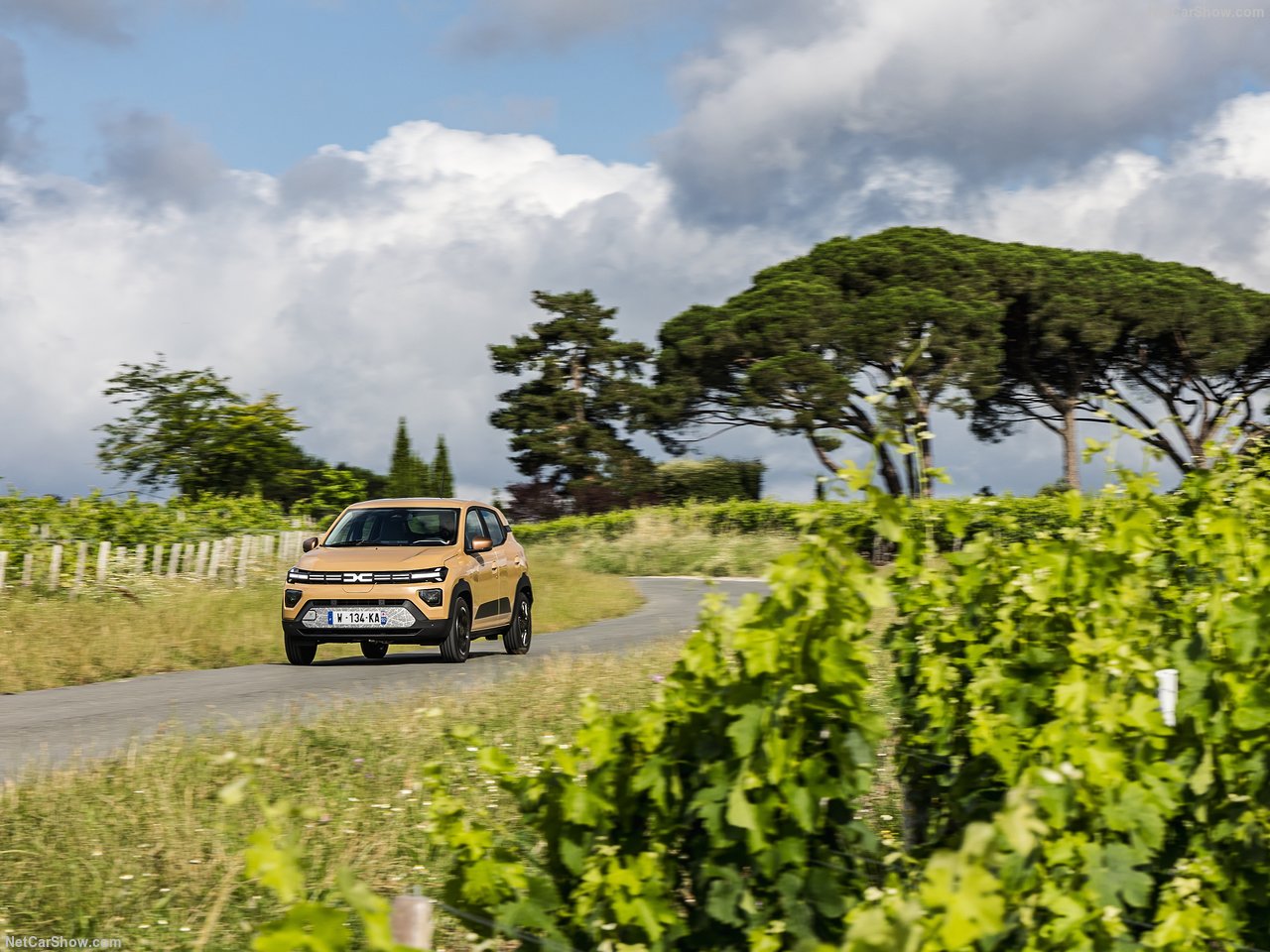
Dacia ranked in 4th (-2%), followed by Peugeot -up 1 spot- in 5th (-3.7%) and Renault -down 1 spot- in 6th (-14.7%). In 7th place BMW (+3.1%) ahead of Audi -up 1 spot- in 8th (+1.5%), Jeep -down 1 spot- in 9th (-8.7%) and in 10th place Ford -down 2 spots- (-11.6%).
Looking at the best-selling model ranking, reported in the dedicated post, the Fiat Panda was still the market leader, as for the last 40 years, with a 2.6% increase in year-on-year volume. The Dacia Sandero followed in 2nd (-19.8%) and the Jeep Avenger closed the top 3 (+14.5%).
EV Market Trend and Outlook
EV sales shift gear in 2025, growing 78.8% a 10% share of the total. Despite lagging behind EU peers due to structural gaps, government incentives drove year-end demand spikes, supporting sector growth despite overall contraction. To secure long-lasting EV adoption, fiscal reforms and a diversified strategy mix rather than only incentive-based will be the key in the next years.
BYD led among EV brands, growing 807.4% and 10 spots to secure 15.6% of the total. Fiat, despite its overall lackluster performance, surged 2 spots to climb EV ladder and ranked 2nd. Tesla dropped into 3rd, followed by rising contender Volkswagen.
Medium-Term Market Trend
Over the past decade, Italy’s car market has seen many fluctuations. From 2014 onward, sales trended upward, peaking at 1.92 million in 2017, up 43.9% from 2014, driven by economic recovery and stronger consumer confidence.
Between 2017 and 2019, growth stalled as the market neared saturation. The COVID-19 pandemic in 2020 triggered a sharp 28.2% drop to 1.4 million units, a decline that shaped the market in the following years.
Post-pandemic recovery was weak, with a brief rebound in 2021 (+8.9%) fading into a 9.6% decline in 2022, marking the decade’s lowest total at 1.32 million units. While late 2022 showed signs of recovery, 2023 started strong but ultimately saw little change in 2024, as competition from Chinese manufacturers and production challenges constrained growth.
Italy’s EV market surged 172% from 2014 to 2020 and continued expanding, reaching 86,224 units in 2024 with a 5.57% market share. Government incentives and a growing charging network supported this rise, though adoption still lags behind the European average.
Tables with sales figures
In the tables below iniwe report sales for all Brands, top 10 Manufacturers Group and top 10 models.
This content is for members only.
Login Join Now