Algerian Vehicles Market in 2026 shows mild expansion. BYD secures a large share in the country as leader Fiat stumbles. Kia also emerges as new top brand while Geely plummets out of the podium.
Economic Environment
According to the International Monetary Fund, Algeria’s economic growth is forecasted to be aroudn 3.8% in 2026, up from its previous estimate of 2.9%, according to its latest World Economic Outlook report. This upward revision comes despite a challenging global environment marked by geopolitical tensions and slowing economic momentum. Algeria’s improved outlook contrasts with the IMF’s global projection, which expects growth to slow to 3.1% in 2026. Similarly, the World Bank also increased its forecast for Algeria to 3.7%, reflecting growing confidence in the country’s economic prospects. Algeria is among a small group of countries in the MENAAP region experiencing upward revisions in growth expectations.
Automotive Industry Trend and Outlook
Following a struggling 2025, with sales plummeting 42.8% year-on-year, the Algerian vehicle market seems to be recovering. Q1 sales reported a yearly change of +3% compared to prior year’s figures.
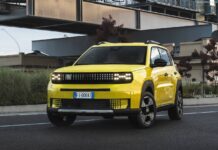
Brand-wise, Fiat was still the leader with a 49.9% share, despite losing 12.4%. BYD climbed 3 spots into 2nd, securing a 10.2% share while growing 118.9%. Opel ranked 3rd, with 10% of the market (+25.2%). Haval followed in 4th, up 3 spots and 140.1% while Chery closed the top 5, losing 1 spots and 18.6%.
EV Market Trend and Outlook
Algeria is investing in its EV ecosystem, which is reflected in a 160.3% year-on-year growth to a 12.3% share. The country has been setting up a series of investment agreement with chinese carmakers to diversify its economy and drive technological advancements.
BYD became the sector’s leader, with a share of about 83% and growing 118.9%. Kia followed in 2nd with 16.4% while Dongfeng dropped 1 spot into 3rd.
Medium-Term Market Trend
Algeria’s vehicle market went through a turbulent decade from 2014 to 2024, largely defined by sharp contractions. Sales fell from 138,252 units in 2014 to 103,678 in 2017 (-19.9%), before rebounding in 2018 and peaking at 158,829 units in 2019. The COVID-19 pandemic then triggered a dramatic 82.3% collapse in 2020, followed by a modest recovery in 2021 (+17.3%) and another decline in 2022 (-22.9%), when the market hit a record low of 25,404 units.
A strong turnaround began in 2023, with sales surging 345.3% to 113,122 units after the government eased import restrictions and reintroduced vehicle import licenses, reopening the market to foreign automakers, especially Chinese brands. Growth continued in 2024, with sales rising 58.5% to 179,332 units, but this was followed by a drop to 102,651 units in 2025, even as electric vehicle sales surged to 8,951, highlighting a shift toward electrification.