Australian Vehicles Market in 2026 fails to grow. YTD sales up to April only grew by 0.1%, with leader Toyota losing 16%. BYD and Chery impressed with major gains, growing 74.6% and 69.5% respectively. Notably, BYD also secured leadership of EV segment which reported major growth of 106.3%.
Economic Environment
2026 forecasts suggest that Australia’s economic outlook will depend on how quickly growth slows, how inflation evolves, and whether rising oil prices from Middle East tensions push inflation higher. Australia’s economy expanded at an annual rate of 2.6% in the December quarter, faster than expected and the strongest pace in nearly three years. The quarterly growth rate reached 0.8%, indicating broad economic momentum across most industries. Strong activity boosted corporate profits, particularly in mining due to higher export prices for iron ore and coal, while LNG profits declined amid global oversupply.
Investment also continued to rise, with significant spending on data centres, aircraft, defence assets, and transport infrastructure. Households increased their savings rate to 6.9%, suggesting consumers are becoming more cautious despite strong economic conditions. However, economists warn that growth above the economy’s potential level could fuel inflation and keep the Reserve Bank of Australia under pressure to raise interest rates further. At the same time, geopolitical tensions affecting oil shipping through the Strait of Hormuz could drive global energy prices higher, complicating the balance between sustaining growth and controlling inflation.
Automotive Industry Trend and Outlook
The struggles of the australian vehicle market persists in 2026. Overall, YTD sales up to April grew only by 0.1% to 377,470 units sold.
The market landscape is under a structural shifts, with EVs growing faster than ICE vehicles and with China replacing Japan as the leading exporter of vehicles in the country.
Brand-wise, the leader was still Toyota with a 17.2% share (-16%), followed by Mazda in 2nd with 7.6% (-9.1%), while Ford ranked 3rd with 7.4% (-3%).
In 4th place Kia (+4.7%), followed by Hyundai in 5th (+4.6%) and BYD -up 6 spots- in 6th (+74.6%).
In 7th place ranked Great Wall (+22.6%) ahead of Mitsubishi -down 2 spots- in 8th (-20.4%), Chery -up 6 spots- in 9th (+69.5%) and MG -down 2 spots- in 10th (-4.5%).
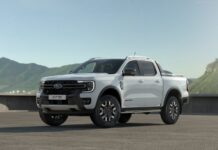
Looking at the top selling models, widely reported in the dedicated article, the leader was the Ford Ranger (-8.2%) followed by the Toyota Hilux (-11.2%) and the Chery Tiggo 4.
EV Market Trend and Outlook
The Australian EV market is expanding quickly, reaching an 12.1% share on the total. YTD sales up to April 2026 grew by 106.3%, driven by a broader assortment of affordable vehicles from chinese carmakers, as well as renewed popularity of the Tesla Model Y.
BYD became new leader, growing by 180.1% and with a 35.8% share. Tesla, despite gaining 52.5%, was surpassed and fell into 2nd. Kia fell 48.4% and closed the top 3.
Medium-Term Market Trend
Over the past decade, the Australian vehicle market has experienced several fluctuations. Registrations rose from around 1 million units in 2014 to 1.16 million in 2017 (AGR 2014–2017: 6.9%), supported by strong consumer demand for SUVs, which reached peak market share around 2016. Momentum slowed from 2018, and the COVID-19 pandemic in 2020 triggered a sharp contraction, with sales falling 13.8% to about 890,000 units, largely due to factory shutdowns and supply chain disruptions.
The market rebounded strongly in 2021, surpassing 1 million registrations (+15.1% year-on-year) as pent-up demand and government stimulus supported recovery. Growth continued in the following years, reaching 1.19 million units in 2024 and 1.2 million in 2025, corresponding to an AGR of 6.8% between 2015 and 2025.
The electric vehicle (EV) segment also expanded significantly. Between 2014 and 2018, EV sales grew by 123%, reflecting rising interest in sustainable mobility. Although the pandemic slowed momentum in 2020, the segment recovered rapidly, with sales more than doubling in 2023 thanks to improved charging infrastructure, a wider range of affordable models, and policy support. By 2024, EV sales stabilized at around 77,000 units (+2% year-on-year), highlighting the gradual mainstream adoption of electric mobility in Australia.
Tables with sales figures
In the tables below we report sales for all Brands, top 10 Groups, and top 10 Models.
This content is for members only.
Login Join Now