
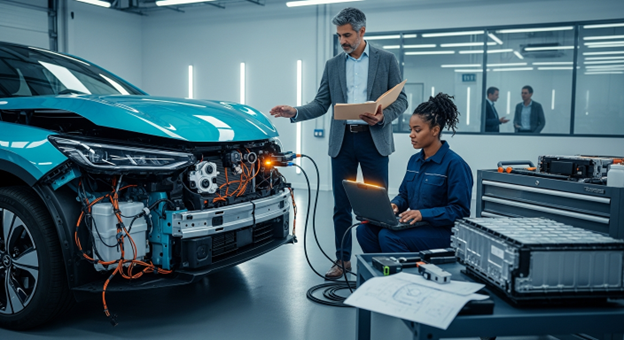
Electric vehicles have changed the anatomy of car crashes. While total motor vehicle fatalities remain a national crisis, with 40,901 deaths in 2023 alone, the nature of these collisions is shifting fast. Resolving an EV collision now means grappling with new legal and cyber risks that simply didn’t exist a decade ago.
Why EV Crashes Hit Differently
The sheer weight of an electric vehicle’s battery pack changes the physics of a collision. An electric sedan can weigh thousands of pounds more than an equivalent gas-powered car, thanks to dense battery packs lining the floorboard. That extra mass means significantly higher kinetic energy during a high-speed impact, and that force transfers directly to other vehicles and roadside infrastructure.
Think about the vulnerability involved when a motorcycle hits a car. Now picture that same weight disparity between a heavy EV and a compact sedan. The occupants of the lighter vehicle absorb the brunt of that energy. And when these heavy EVs slam into standard highway barriers? The damage often exceeds the design limits for which those barriers were built.
Thermal Runaway Risks
Beyond impact force, EVs introduce fire risks fundamentally different from those of a gas tank. When a severe collision pierces or crushes the protective casing of an EV battery pack, the damaged cells can trigger thermal runaway. It’s an aggressive chemical reaction in which localized heating escalates into an intense, self-sustaining fire.
Putting out these fires isn’t simple. Lithium-ion batteries generate their own oxygen, which means they can reignite hours after the initial crash. Firefighters often need specialized containment pools or fire blankets, plus massive volumes of water to cool the reaction.
Fatal and serious traffic crashes already carry a staggering economic toll, roughly $1.9 trillion in 2023. The specialized hazmat cleanup, prolonged road closures, and environmental remediation that follow severe EV fires only push those numbers higher.
Technology and the Liability Puzzle
Determining fault after a crash used to be a relatively straightforward debate between two drivers. Not anymore. Advanced Driver Assistance Systems (ADAS), the suite of features like lane-keeping assist, adaptive cruise control, and automated braking, have placed vehicle manufacturers squarely in the middle of legal disputes. When these systems fail, victims have to figure out whether human error or a software glitch caused the collision. That’s a much harder question to answer.
Phantom Braking
Driver-assist features are designed to prevent accidents. But sometimes they malfunction with terrifying results. Recent lawsuits highlight the dangers of phantom braking, where plaintiffs allege that faulty ADAS software caused vehicles to lose control or brake violently without cause.
So what actually triggers this? Vehicle sensors, cameras, or radar systems misinterpret shadows, reflections, or oncoming traffic as immediate threats, then slam the brakes at full force. On a high-speed road, chaos ensues.
Assigning fault here gets messy. Did the human driver fail to react, or did the machine’s programming actively cause the rear-end collision? EV crash investigators have to untangle individual driver negligence from manufacturer or dealership liability, much as they do in figuring out who’s responsible for a car accident during a test drive.
Black Box Data
Resolving an EV fault dispute means analyzing massive amounts of onboard digital data. Connected vehicles are essentially rolling computers, relying on cloud-based telemetry systems that record everything from steering wheel angles and braking pressure to seatbelt engagement and GPS coordinates at the exact moment of impact.
Here’s the problem: manufacturers often guard this data closely, treating their software logs and algorithmic decision trees as trade secrets. Accident victims frequently need court-ordered subpoenas just to get access. And if you wait too long? The vehicle’s computer may overwrite the data, or it could be permanently erased from cloud servers.
EV Insurance and Repair Costs
The financial fallout from an EV crash is harsh. Due to specialized labor requirements and strict manufacturer repair protocols, EV repair cycles run about 40% longer than those for equivalent gas-powered cars. Collision centers have to dedicate isolated safety bays for damaged EVs to prevent fire risks, all while waiting on backordered high-voltage parts. Only technicians with extensive high-voltage electrical training can safely work on these vehicles.
Those extended timelines force insurers to cover thousands of dollars in rental car costs. Combine that with the eye-watering price of replacing a damaged battery pack, and it’s no surprise that EV premiums run 15% to 30% higher than premiums for traditional cars. Insurers also tend to declare EVs a total loss more quickly, as even minor structural damage can compromise the battery casing.
| Post-Crash Factor | Traditional ICE Vehicles | Electric Vehicles (EVs) |
| Average repair cycle | Baseline industry standard | ~40% longer due to specialized labor |
| Insurance premiums | Standard risk models | 15%–30% higher due to battery risks |
| Total loss threshold | Structural or mechanical damage | Reached faster; high-cost battery packs |
| Liability assessment | Primarily driver error | Mixed: driver error vs. ADAS/software |
Legal Complexities of High-Tech Crashes
Given the data involved, securing fair compensation requires legal teams capable of conducting forensic telemetry audits. Insurance companies heavily scrutinize high-dollar EV claims and frequently push back against full battery replacements or specialized repairs. They may try to blame the driver, arguing that ADAS features were deactivated or misused before the crash.
Experienced personal injury attorneys know that protecting digital evidence has to happen immediately. According to legal experts, “In a modern EV crash, the physical evidence on the road is only half the story; securing the vehicle’s digital telematics before it is overwritten or withheld by the manufacturer is critical to proving fault.”
For someone dealing with severe injuries and mounting medical bills, navigating this technical landscape alone is nearly impossible. Sound familiar? Working with a car accident lawyer who is aware of both the technological and medical complexities of EV collisions can be the difference between a denied claim and full financial recovery. Finkelstein & Partners, for instance, focuses on forcing manufacturers to release critical black box data and preventing insurers from undervaluing catastrophic injury claims.
Here are some steps to protect your case right after an EV crash:
- Request an immediate telemetry hold. Your attorney will draft and send a spoliation letter to prevent the manufacturer from deleting cloud-based crash data.
- Document all ADAS settings. Record whether autopilot, lane-assist, or automatic braking features were engaged at the time of the collision.
- Secure the battery management system. Don’t let salvage yards dismantle the vehicle before independent forensic experts can download localized data from the BMS.
- Track extended mobility costs. EV repairs take significantly longer, so document every out-of-pocket rental and transportation expense for your insurance claim.
What Comes Next
Automotive innovation isn’t slowing down, and neither is the complexity of accident investigations. As fully automated vehicles inch closer to public roads (possibly by 2027), liability debates will shift further away from human reflexes and closer to software algorithms and corporate accountability.
What can you do right now? Update your insurance policy to cover specialized battery repairs and extended rental limits that match longer repair cycles. Make sure you’ve got the right legal resources lined up before something goes wrong, not after. Driving the future means being prepared for its unique risks.