
British Auto Market in 2026 stays on growth path. YTD sales up to April grew by 9%, with MG and Skoda reporting the largest gains while leader Volkswagen struggled (-9%). EVs momentum continues, with BYD surging 124% and 2 spots into 1st.
Economic Environment
Brand-wise, Volkswagen was still the best selling brand with a 7.8% share (-5.9%).
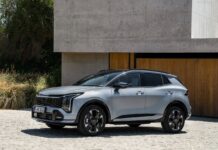
Kia -up 1 spot- ranked 2nd with a share of 5.7% (+0.4%) while BMW -down 1 spot- ranked 3rd with a 5.6% share (-2.4%).
Ford ranked 4th (-1.7%) followed by Audi in 5th (+6.4%), and Mercedes -up 1 spot- in 6th (+7.6%).
Opel -up 2 spots- ranked 7th (+3.7%) ahead of MG -up 4 spots- in 8th (+8.6%), Skoda -up 4 spots- in 9th (+9.3%) and Toyota in 10th (-3.4%).
Looking at best-selling models, the leader was still the Ford Puma (+11.5%). The Kia Sportage surged 8.9% into 2nd while the Jaecoo 7 climbed 34 spots and grew by 199.7% into 3rd.
EV Market Trend and Outlook
Medium-Term Market Trend
The decline of the British car market has been unfolding for decades, largely due to manufacturers shifting production to lower-cost European locations, with Brexit further accelerating the trend. After reaching a peak of 2.6 million car sales in 2016, the market contracted significantly, falling to 1.6 million in 2020 during the pandemic. Rather than rebounding strongly, sales remained subdued, rising by just 0.7% in 2021 before declining again by 1.6% in 2022. Broader global pressures—including inflation, high fuel costs, political instability, supply chain disruptions, and the shift toward electrification—have weighed on the market, with Brexit adding additional economic strain.
A recovery began in 2023, with car sales increasing by 17% to 1.9 million, followed by modest growth of 2.6% in 2024 despite ongoing policy uncertainty. Sales continued to improve into 2025, rising from 1.95 million in 2024 to 2.02 million, although overall volumes remain nearly 20% below 2014 levels. EV adoption has expanded over time but with noticeable volatility, including a slowdown in 2018–19. After peaking in 2023, EV growth weakened, with registrations falling from 262,740 in 2024 to 231,230 in 2025 as manufacturers faced challenges linked to the transition and wider market conditions. Reflecting this uncertainty, BMW postponed a £600 million investment in its Oxford plant for electric Mini production.
Tables with sales figures
In the tables below we report sales for the top 40 Brands and top 10 Manufacturers Groups and the top 10 models.