Kazakhstan Vehicles Market in 2026 is expanding steadily. Q1 sales grew by 9.7%, with Chevrolet and Kia reporting the largest gains among top 5 brands. BYD surged 454.7% and led EV growth although the share is still small.
Economic Environment
Kazakhstan’s economy is projected to grow by 4.6% in 2026 and 4.4% in 2027, maintaining strong momentum despite a weaker global outlook. However, inflation in the country is expected to remain high at around 10.7% in 2026 and 10.1% in 2027, continuing to challenge price stability. Globally, economic growth is forecast to slow to 3.1% in 2026, down from 3.4% in 2025, reflecting mounting uncertainty. Geopolitical tensions, particularly in the Middle East, are weighing on economic performance and reshaping expectations.
Disruptions to energy markets and trade flows have further contributed to the downward revision in global growth. Inflation worldwide is projected to reach 4.4% in 2026 before easing to 3.7% in 2027, though risks remain elevated. In more adverse scenarios, prolonged energy shocks could push global growth as low as 2% to 2.5%, accompanied by higher inflation. Overall, emerging and developing economies are expected to bear the brunt of these pressures, highlighting the need for careful and adaptive economic policymaking.
Automotive Industry Trend and Outlook
After reporting impressive gains in the prior year, the kazakh vehicle market continues to expand in 2026. Except for a temporary halt in february, Q1 sales reported year-on-year growth of 9.7% to 51,511 units.
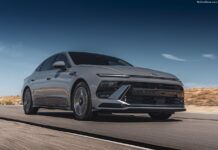
Brand-wise, Hyundai was still the leader with a 21.3% share (-6.6%), followed by Chevrolet in 2nd with 15.2% of the market (+30.6%) and Kia in 3rd with 15.1% (+58.6%).
Chery -up 1 spot- ranked in 4th (+19.7%), in front of Jetour -down 1 spot- closed the top 5 (-0.8%).
Notably, BYD grew by 454.7% into 13th while climbing 15 spots.
Looking at specific models the best selling car was the Chevrolet Cobalt, which grew 22% and secured 1st spot. The Hyundai Tucson only increased by 0.1% and ranked in 2nd. The Kia Sportage ranked 3rd, growing 55.1%.
EV Market Trend and Outlook
Kazakhstan’s EV market continues to expand, growing 169.1% in Q1 of 2026. New affordable models introduced by chinese brands like BYD support the sector’s development, although government support remains key for the future.
BYD surged 1 spot into 1st with a 63.6% share, followed by Lixiang which surged 8 spots into 2nd and Zeekr which lost its leadership and fell by 37.5%.
Medium-Term Market Trend
Kazakhstan’s vehicle market experienced rapid expansion between 2010 and 2014, with especially strong triple-digit growth in 2011 and 2012, ultimately reaching a peak of 150,330 units in 2014. This was followed by a sharp contraction in 2015 and 2016, when demand fell significantly, particularly in the light commercial segment, and total sales dropped to just 44,388 units by the end of 2016. A gradual recovery began in 2017, with the market steadily regaining momentum and reaching 71,994 units by 2019. Despite global economic disruption caused by the COVID-19 pandemic, this positive trend continued, as sales rose to 92,963 in 2020 and further increased to 119,445 in 2021.
Growth moderated in 2022, with the market expanding only 1.8% to 123,500 new registrations, largely due to higher vehicle prices driven by global supply-chain disruptions, rising raw material costs, and a shortage of microchips that constrained production worldwide. Following this slowdown, the market rebounded strongly, with sales climbing to 198,842 units in 2023 and continuing upward to 203,699 in 2024. This growth trajectory persisted into 2025, when vehicle sales reached a new high of 234,102 units, reflecting renewed consumer demand and improving market conditions.
Tables with sales figures
In the tables below we report sales for all Brands, top 10 Manufacturers Group and top 10 Models.
This content is for members only.
Login Join Now