
South Korean Vehicles Market in 2026 keeps growing. Q1 sales gained 5.2%, with Tesla and BYD moving up several spots within the top 10. The two EV giants are now competing with Hyundai and Kia to secure leadership in the electric segment.
Economic Environment
Automotive Industry Trend and Outlook
The Korean vehicles market stabilized again after surging in January and February, with Q1 sales growing by 5.2% to 407,713 units.
Brand-wise, Kia -up 1 spot- became leader with a 34.7% share (+5.3%), followed by Hyundai -down 1 spot-in 2nd with 32.6% (-2.7%). Kia and Hyundai together make up 67.3% of the market.
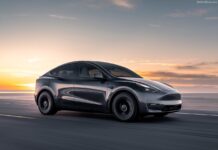
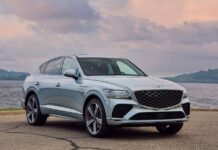
Genesis ranked in 3rd (-12.1%), followed by Tesla -up 4 spots- (+335.1%), and BMW -down 1 spot- in 5th (+4.1%).
Mercedes -down 1 spot- ranked in 6th (+4.3%), in front of SsangYong in 7th (+40.2%) and Renault Samsung -down 2 spots- in 8th (-20.1%).
BYD -up 23 spots- skyrocketed into 9th, in front of Lexus closing the Top 10 (-3.1%).
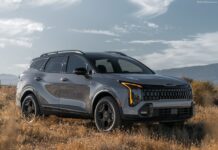
Looking at specific models, reported in the dedicated article, the Kia Sorento was still the best seller with a a 1% gain in year-on-year sales. The Hyundai Grandeur ranked 2nd (-5.1%) while the Hyundai Sonata rose 7 spots in 3rd.
EV Market Trend and Outlook
Despite struggles with US tariffs, the Korean EV segment is booming in 2026, supported by a strenghtened network of government incentives. Up to February, it reached a 20.1% share on the total while growing 220.9%.
Kia retained the top spot with 37.4% of the segment; however, Tesla secured the 2nd, growing 338.3% to achieve a 26.1% share, threatening its leadership. Hyundai closed the podium with 14.9% while Renault and BYD ranked 4th and 5th.
Medium-Term Market Trend
South Korea’s automotive industry was largely closed to foreign imports until 2012, after which increased competition helped expand the market. Vehicle sales grew steadily, reaching a peak of 1.82 million units in 2016, before stabilizing through 2020. During the pandemic, government incentives boosted demand, pushing sales up 5.8% to a record 1.87 million units. However, this created a short-term pull-forward effect, leading to declines of 8.7% in 2021 and 2.4% in 2022, with total sales falling to 1.66 million. More recently, total vehicle sales stood at 1,631,203 units in 2024, down 5.6% year-over-year, before recovering slightly to 1,669,789 units in 2025, reflecting a 2.4% increase.
The electric vehicle (EV) market in South Korea has been particularly volatile. After reaching 17,769 units in 2018, EV sales dropped sharply in 2019, then surged dramatically, rising nearly tenfold in 2021 and doubling again in 2022 to 108,758 units. In 2024, EV sales declined by 3.4% to 106,053 units due to safety concerns, limited charging infrastructure, high battery costs, reduced subsidies, and stronger competition from hybrid vehicles. Despite these challenges, the market rebounded strongly in 2025, with EV sales climbing to 155,920 units, marking a significant 47.0% year-over-year increase (following 8.8% growth in 2024).
Tables with sales figures
In the tables below we report sales for all Brands, top 10 Manufacturers Group and top 10 Models.