South Africa Car Market in 2026 grows steadily. YTD sales up to february gained 9.3%, with Toyota retaining the top spot with a wide margin. Mahindra and Chery grew in double-digits while Jetour emerged with standout gains into 10th.
Economic Environment
South Africa’s economic outlook in 2026 shows early signs of improvement, particularly in public finances, but it has not yet reached a decisive turning point. Government debt appears to have peaked at just under 80% of GDP, and debt servicing costs are expected to stabilize relative to key social spending. Financial conditions have improved, supported by a stronger rand, lower inflation expectations, and declining government bond yields. However, overall economic growth remains weak, projected at around 1.6% in 2026, with only gradual improvement in the coming years.
Structural challenges persist, including low investment levels, high unemployment exceeding 30%, and a still-significant budget deficit of about 4% of GDP. Ongoing reforms in energy, transport, digital infrastructure, and visa systems are expected to support long-term growth, but progress is uneven and will take time to have a full impact. The government is also focusing on improving state capacity, particularly at the municipal level, and tightening fiscal controls. Overall, while macroeconomic stability is improving, stronger growth and deeper structural reforms are still needed for a sustained economic turnaround.
Automotive Industry Trend and Outlook
The south african vehicle market reports steady gains in the early months of 2026.
After growing 14.3% in 2025, it started off with an 8% year-on-year surge in January. Considering YTD sales up to february, 102,325 units were sold (+9.3%).
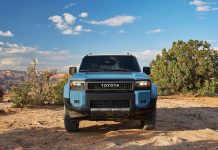
Brand-wise, Toyota was still the leader (+0.8%), followed by Suzuki in 2nd (+3.2%) and Volkswagen in 3rd (-11%).
Hyundai ranked 4th (+5.1%) ahead of Ford in 5th (+1.8%), Mahindra –up 3 spots- in 6th (+61.6%) and Chery in 7th (-32.4%).
Kia ranked into 8th (+10.5%), followed by Renault -down 3 spots- in 9th (-1.5%) and Jetour -up 8 spots- closing the Top 10 (+538.9%).
Looking at the models, the best seller became the Toyota Hilux, climbing 1 spot and 11.4% while the Suzuki Swift dropped 8.9% into 2nd. The Ford Ranger ranked 3rd, up by 3.4% and 2 spots.
EV Market Trend and Outlook
South Africa’s EV transition remains slow, with only a small fraction of the total sales up to February 2026. The future of the segments is uncertain, amidst political tension and delayed policy implementation.
BMW retained leadership with a 31.8% growth and a share of about 44.6%. Mercedes followed in 2nd (+164.3%) while Audi ranked 3rd (+218.2%).
Medium-Term Market Trend
South Africa’s vehicle market experienced an overall decline between 2014 and 2024, largely driven by persistent economic uncertainty, high borrowing costs, and limited consumer affordability. Sales started at 612,699 units in 2014 before declining for two consecutive years to 522,328 in 2016. A modest recovery followed, but volumes slipped again in 2018 and 2019, reaching 508,277 units, about 14% below 2016 levels.
The COVID-19 pandemic caused a sharp contraction in 2020, with registrations falling 29.2% to 360,050 units. However, the decline was temporary rather than structural, as the market rebounded to 440,425 units in 2021 and further to 500,347 in 2022. In 2023, economic pressures, including high inflation and elevated interest rates, led to a 4.4% drop in sales to 478,476 units. The market then recovered in 2024, rising 5.4% to 511,111 units, and continued its upward trend in 2025, reaching 584,320 units.
Despite this recovery, the electric vehicle segment remains underdeveloped due to high import duties, unreliable electricity supply, and limited charging infrastructure, alongside continued reliance on coal-based energy.
Tables with sales figures
In the tables below we report sales for top 10 Brands.
This content is for members only.
Login Join Now