Czech Republic Car Market in 2025 mantains upward trend. YTD sales up to November rose by 5.8% with Renault posting the largest gains, up 41.3% into 9th. Skoda kept leading while also securing major share in EVs, which already surpassed full-year figures for 2024.
Economic Environment
Czechia’s GDP is forecasted to rise by 2.4%, driven mainly by strong private consumption supported by real wage growth and lower household saving rates. Growth is expected to slow to 1.9% in 2026 before rebounding to 2.4% in 2027 as investment and household spending strengthen. Rising tariffs and weaker demand from key trading partners are projected to weigh on exports in 2025 and 2026, even as imports grow faster due to strong domestic demand. Inflation is projected to fall to 2.3% in 2025 and ease further in the following years, supported by lower energy prices despite higher food inflation. The labor market will remain tight, with unemployment edging up only slightly from 2.7% in 2025 to around 3% by 2027.
Real wages are forecast to outpace inflation throughout the period, though nominal wage growth gradually moderates. Public finances are expected to stay in deficit, narrowing to 1.8% of GDP in 2025 but widening again to 2.0% in 2026 and 2.2% in 2027 as temporary revenues expire and expenditure trends shift. Public debt is projected to rise gradually yet remain below the EU average, reaching about 45% of GDP by 2027. Investment, both private and public, is expected to strengthen through 2026 due to EU fund absorption, construction recovery, and defense spending before easing in 2027.
Automotive Industry Trend and Outlook
Considering YTD sales up to November 2025, the Czech car market grew 5.8% year-on-year to 224,841 units. Figures show a consistent upward trend after contracting during the early months of the year.
Brand-wise Skoda ranked 1st (+6.6%), posting a huge lead on the runner-up Hyundai (-1.6%). Toyota ranked 3rd (-4.5%) in front of Volkswagen in 4th (+5.7%) and Dacia -up 1 spot- in 5th (+26.9%).
Kia ranked 6th (+3.5%), followed by Mercedes in 7th (+3.1%), Ford in 8th (+21.6%), Renault -up 2 spots- in 9th (+41.3%) and BMW -down 1 spot- in 10th (+5.4%).
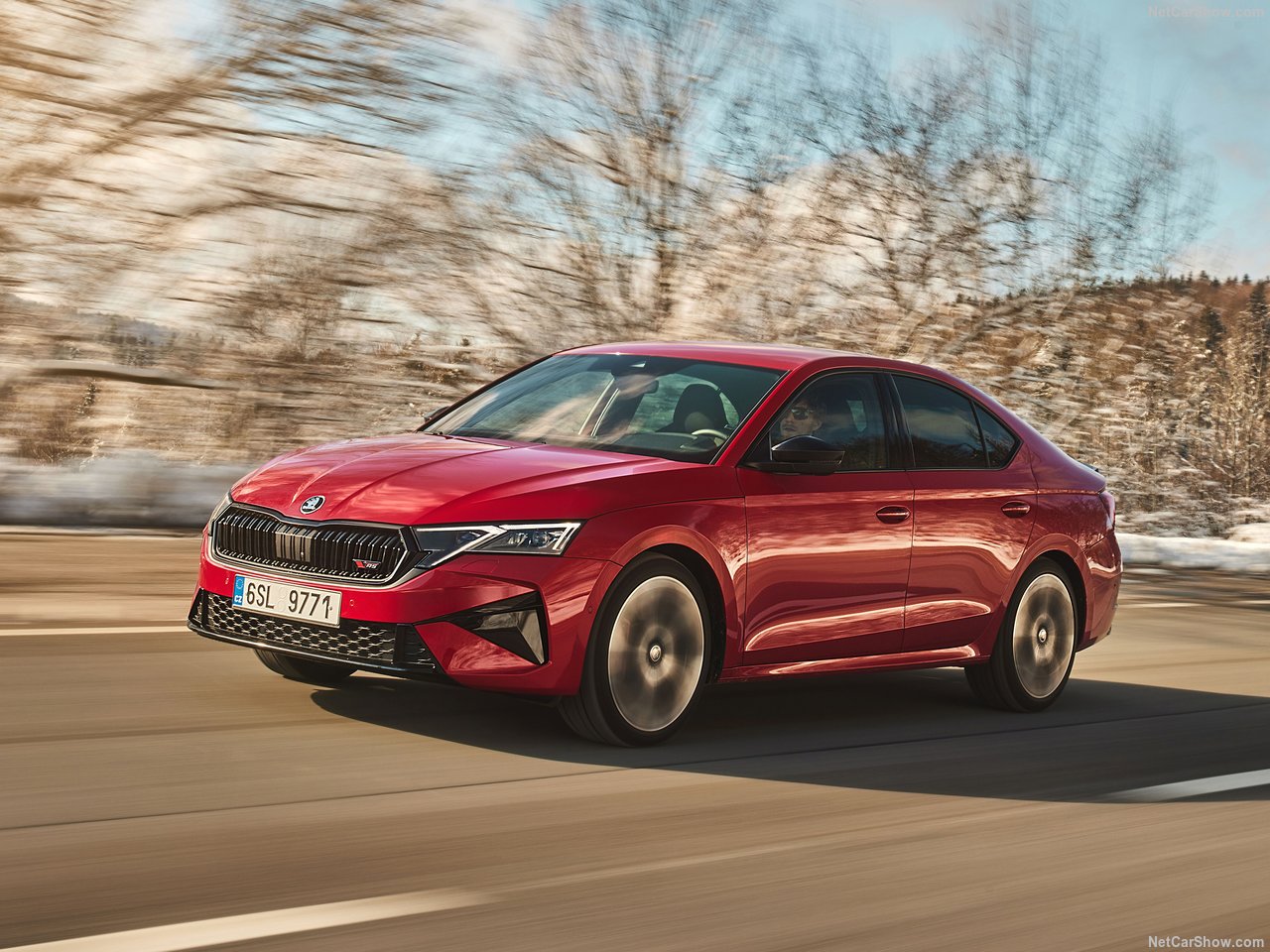
Looking at specific models, for which there is a dedicated article, Skoda held the top 6 spots. The Skoda Octavia kept its position in 1st despite falling 7.3%. The Skoda Kamiq -up 2 spots- followed in 2nd, up 21.3%.
EV Market Trend and Outlook
Škoda continues to gain EV market share, surpassing Tesla to become country’s sector leader. Factors such as affordability and a flexible market strategy pushed the Elroq and Enyaq models higher in the rankings among the top-performing EU EVs. YTD figures up to November 2025 show that EV sales in the Czech Republic surged by 35.2%, reaching a 5% market share.
Skoda -up 1 spot- became the new sectoral leader, up 216.4% while Tesla fell 1 spot into 2nd, down 49.1%. Volkswagen closed the top 3, up 25.1%.
Medium-Term Market Trend
The Czech car market experienced overall growth during the decade from 2014 to 2024. Starting at 191,938 units in 2014, it expanded steadily in line with broader macroeconomic improvements, reaching a decade-high of 270,842 units in 2017. This growth was driven by rising consumer confidence, increased disposable income, and strong domestic demand.
However, the market began to contract afterward, declining by 4.5% in 2019 to 248,896 units, as early signs of a cyclical slowdown and global trade uncertainties began to weigh on automotive demand. The COVID-19 pandemic hit in 2020, causing an 18.9% drop in sales to 201,040 units. Despite this, the Czech market proved more resilient than many other European countries of similar size, managing to remain above the 200,000-unit threshold.
A recovery began in 2021, although it was temporarily disrupted in 2022 with a 6.9% decline due to ongoing supply chain issues and semiconductor shortages. Growth resumed in 2023, with a strong 15.4% rebound to 220,103 units, and continued modestly in 2024, increasing by 4.6% to 230,332 units.
EVs gained meaningful traction only in the latter part of the decade, with the market still representing a small share of total sales. In 2020, EV registrations surged by 283.3% to 1,265 units, spurred by expanding model availability, early incentive schemes, and rising environmental awareness. From there, growth remained in the double digits through to 2024, when the segment posted an impressive 79.7% increase.
Tables with sales figures
In the tables below we report sales for all Brands, top 10 Manufacturers Group and top 10 models.