Romanian Car Market in 2026 plummets. YTD sales up to April fell by 13.6%, with many top brands reporting double-digit losses. Chery was the standout, defying the headwinds and climbing up 40 spots into 10th.
Economic Environment
Romania’s 2026 budget targets a 6.2% of GDP deficit through revenue-led consolidation, strict limits on current spending, and record public investment, with a framework that appears broadly credible but dependent on effective implementation. Official forecasts assume 1.0% GDP growth and 6.5% inflation, though these look optimistic, with weaker domestic demand and higher price pressures likely to produce slower real growth and more persistent inflation.
Consumer behaviour already signals caution, as falling retail sales reflect the drag from fiscal tightening and a stagflationary environment, pointing to subdued consumption as a key feature of 2026. The fiscal adjustment relies heavily on tax increases, such as higher VAT, excises, and dividend taxes, alongside efforts to improve revenue collection, which remain a structural challenge.
Automotive Industry Trend and Outlook
The negative trend that defined the Romanian car market for most of 2025 continues in 2026. Even though losses reported decreased compared to early months, YTD sales up to April dipped by 14.2% to 37,480 units.
Brand-wise, the leader was still Dacia with a 17.9% share (-45.2%), followed by Toyota in 2nd with a share of 9.8% (-6.2%) and Skoda in 3rd with a 8.9% share (-4.6%).
Volkswagen ranked in 4th (-0.6%), followed by Renault in 5th (-35.5%).
Notably, Chery reported outstanding gains in 10th, climbing up 30 spots while BYD similarly reported major growth but failed to enter the top 10.
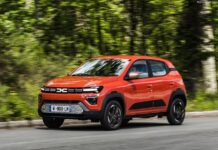
Looking at specific models, reported in the dedicated article, the Dacia Duster became the best seller despite losing 37.1% in year-on-year sales, followed by the Dacia Bigster which skyrocketed into 2nd.
EV Market Trend and Outlook
Romania’s EV segment survided the broader downturn, growing 48.9% up to April 2026. BYD took the market by storm, displacing Dacia and achieving a key role in the sector’s development, which still remains dependent mostly on public funding and incentive schemes.
BYD became the new leader, climbing 13 spots and securing a 32.5% share. Tesla followed in 2nd, growing 124.8% while Dacia dropped in 3rd, losing 76.7%.
Medium-Term Market Trend
Romania’s car market expanded strongly between 2014 and 2019, with new vehicle registrations rising from 70,172 to 161,533 units, more than doubling over the period, supported by solid economic growth and government incentives such as the “Rabla” scrappage scheme, which promoted the uptake of newer, more efficient vehicles. This upward trend was interrupted in 2020, when the COVID-19 pandemic caused a sharp 22% contraction in sales to 121,199 units amid lockdowns and heightened economic uncertainty.
The market then entered a gradual recovery phase, with registrations climbing to 142,477 units in 2023 and continuing to grow by 6.1% to 151,106 units in 2024, followed by a further 3.5% increase to 156,425 units in 2025.
In contrast, electric vehicle (EV) adoption has struggled to keep pace with the broader market rebound. EV sales dropped significantly, falling by 34.2% in 2024 and a further 14.1% in 2025, reflecting reduced momentum in the segment. Earlier data already showed a 32.2% decline in 2024 to 9,795 units, representing just 6.48% of total market share. This weakness has been largely attributed to cuts in subsidies under the “Rabla Plus” program, which had previously played a key role in supporting EV demand.
Tables with sales figures
In the tables below we report sales for all Brands, top 10 Manufacturers Group and top 10 Models
This content is for members only.
Login Join Now