The car business is changing faster than most people realize. What used to be about building better engines and smoother transmissions has shifted toward writing better code and managing massive amounts of data. Tesla showed the world that a car could get better after you bought it — just download an update like you would on your phone. That single move changed everything. Now traditional automakers are scrambling to catch up, hiring thousands of software engineers and rethinking how they build vehicles. The question isn’t whether to integrate AI anymore. It’s how quickly you can do it before someone else eats your lunch.
Rethinking Factory Infrastructure
Volkswagen Group dropped serious money on a cloud platform with Microsoft. The goal? Get all their brands — from Audi to Porsche — working off the same software foundation. Sounds simple, but coordinating that many teams across different countries and legacy systems is messy work. Still, it beats the alternative of each brand reinventing the wheel.
Companies like https://dxc.com/industries/automotive have built entire practices around helping automakers handle this transition. Their automotive industry IT services cover everything from managing telematics data to fixing broken supply chains. For manufacturers who’ve spent decades focused on metal and machinery, outsourcing the IT heavy lifting makes sense. You get expertise without spending years building it internally.
BMW took a different route and opened a whole IT Campus in Munich. Over 2,000 developers work there on BMW Operating System, trying to make sure your navigation, music, and car settings all talk to each other properly. It’s a bigger undertaking than most people think — getting all those systems to play nice together requires constant tweaking.
Why Everyone Wants Cloud Infrastructure
General Motors built Ultifi, a cloud-based OS that lets them push updates to cars remotely. The business angle is pretty clever: sell someone a car, then sell them features later as subscriptions. Heated seats as a service, basically. Whether drivers will go for that long-term remains to be seen.
Mercedes partnered with Google Cloud to build digital copies of their factories. These virtual factories let them test changes before implementing them on actual production lines. Spotting a bottleneck in simulation beats discovering it when you’ve got 500 cars backed up on the assembly floor.
Cloud systems make sense for a few reasons:
- You can scale up to handle data from millions of cars without rebuilding everything
- Updates happen in days or weeks instead of waiting for next year’s model
- Services work the same whether you’re in Berlin or Bangkok
- Big cloud providers spend more on security than most automakers ever could
AI Actually Building Cars Now
Tesla’s neural networks learn from over 5 million vehicles on the road. Every time a Tesla driver brakes hard or swerves, that data feeds back into improving the autopilot system. More cars means more data means smarter software. It’s a flywheel effect that’s hard for competitors to match.
Design Work That Used to Take Months
Generative design sounds fancy but it’s pretty straightforward — tell the AI what constraints you have (weight, cost, strength) and it spits out options you wouldn’t think of yourself. GM made a seat bracket that weighs 40% less than the old version. Same strength, less material, lower cost. That’s the kind of optimization humans miss because we think in familiar patterns.
Ford now uses neural networks for aerodynamics testing. What used to require months of wind tunnel time and computational fluid dynamics simulations happens in days. The AI suggests body shapes that cut drag and improve fuel economy without anyone having to guess their way through thousands of iterations.
Hyundai put cameras on their welding lines with machine learning watching every joint. Bad welds get flagged before the part moves down the line. Catching defects early beats scrapping finished vehicles or dealing with warranty claims later.
Maintenance Before Things Break
Oil changes every 10,000 kilometers made sense when that’s all the data you had. Now cars have hundreds of sensors constantly reporting back. AI looks at all that information and says “your brake pads will need replacing in about 3,000 miles” instead of waiting until they squeal.
BMW’s Proactive Care watches your car around the clock and books service appointments automatically when something needs attention. The system even orders parts ahead of time so you’re not waiting around the dealership while they hunt down a replacement.
Fleet Operators Save Real Money
UPS runs 130,000 delivery trucks. Their AI-powered routing considers traffic, weather, delivery windows, and even which turns drivers should avoid (right turns waste time and fuel). The savings add up fast when you’re operating at that scale.
DHL’s predictive maintenance catches problems before trucks break down mid-route. Getting 80% accuracy on failure prediction means way fewer emergency repairs and vehicles sitting idle waiting for parts. Schedule maintenance during downtime instead of scrambling when something quits.
These systems track pretty specific stuff:
- How much life your battery has left and when to swap it
- Brake pad thickness without taking wheels off
- Engine wear patterns from combustion analysis and vibration data
- Electrical system health across critical circuits
The Self-Driving Situation
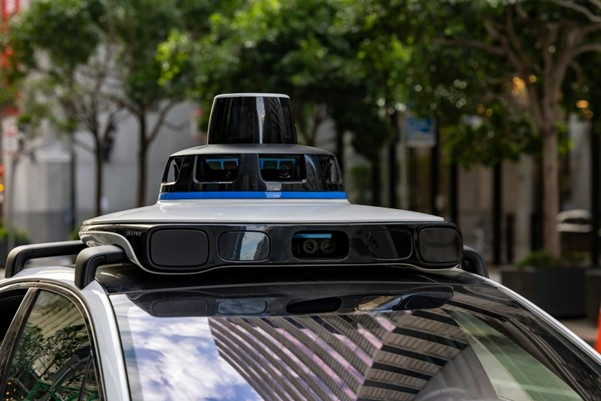
Waymo’s logged over 20 million miles testing autonomous vehicles. Their robotaxi service runs in Phoenix and San Francisco — you can actually order a car with no driver through an app. It works, though the service areas stay pretty limited for now.
Mercedes got Level 3 certification for Drive Pilot in Germany and Nevada. That’s the first system where you can legally take your hands off the wheel and eyes off the road (under specific conditions — highways, slow traffic, daytime only). If something goes wrong, Mercedes takes the liability, not the driver. That’s a big deal legally.
How Cars See the World
Modern self-driving systems throw everything at the problem:
- Cameras pick out road signs, lane markings, pedestrians, other vehicles
- Lidar builds detailed 3D maps of surroundings down to centimeter accuracy
- Radar works when cameras can’t — heavy rain, fog, snow
- Ultrasonic sensors cover blind spots and handle parking
Mobileye (owned by Intel) built something called REM — basically crowdsourced mapping where millions of regular cars with cameras contribute road data. The system builds super detailed maps without needing specialized survey vehicles driving around constantly.
Electric Cars Need Smart Charging
The AI figures out optimal charge/discharge schedules to save you money without leaving you stranded with a dead battery.
Tesla’s system looks at how you drive, where you’re going, weather conditions, and adjusts power distribution accordingly. Going uphill? The system already planned for that and optimized battery usage before you started the climb.
Range Estimates That Don’t Lie
Old-school range estimates just averaged everything out. Your car might say 250 miles of range, but drive it hard or blast the AC and suddenly you’re looking at 180. AI builds personal models based on how you actually drive. It knows you always crank the heat in winter and accounts for that in predictions.
Audi’s e-tron plans routes around terrain. Coast down hills to recover energy, ease up before climbs. The system even tells you what speed to maintain for maximum efficiency. Following these suggestions actually makes a noticeable difference in range.
Processing Power Inside the Car
Self-driving decisions can’t wait for a round trip to the cloud. A few milliseconds of delay could mean hitting something instead of avoiding it. Everything has to happen locally, right there in the vehicle.
Qualcomm’s Snapdragon Ride platform crunches over 700 trillion operations per second, processing feeds from dozens of sensors simultaneously. That’s supercomputer-level performance stuffed into a car.
Volkswagen’s gesture controls work through edge computing too. Wave your hand and the system responds instantly because it’s not waiting to check with a server somewhere. Plus, camera data never leaves the vehicle, which people appreciate from a privacy standpoint.
Training AI Without Sharing Data
Federated learning is a clever workaround for privacy concerns. Each car trains its own AI model on local data, then just shares the learning (model weights) without sending actual data back to headquarters.
BMW uses this for improving road sign recognition. Cars in different regions learn about local signs, then pool their knowledge without anyone seeing individual driver data. Region-specific signs get recognized without building a massive central database of everyone’s driving habits.
Benefits of keeping computation in the vehicle:
- Reactions happen in milliseconds not seconds
- Personal data stays private
- Critical systems work offline
- Less bandwidth wasted uploading gigabytes of sensor data
Where This Goes Next
The industry’s heading toward “software-defined vehicles” where most capabilities come from code, not hardware. Buy a car today, download new features next year. Hardware becomes a platform that software runs on top of.
Sony and Honda teamed up for Afeela, approaching car design like a consumer electronics product. The vehicle’s pitched as an entertainment and connectivity platform that happens to drive you places, rather than the other way around.
Apple’s working on Project Titan, though details are scarce. Their patents suggest heavy focus on autonomous driving and tight integration with iPhones, Apple Watches, and the rest of their ecosystem.
The transformation runs deeper than adding screens and sensors. Software and AI are fundamentally changing what a car is and how it’s built. Companies that figure out how to blend manufacturing expertise with software development will do fine. The ones that can’t will probably get acquired or fade out. That’s how these transitions usually go.