
Nigerian Vehicle Market in 2026 is expanding. Q1 sales grew by 119%, with GAC reporting the most impressive surge into 2nd despite Innoson retaining the largest share. Notably, Hyundai dropped 3 spots out of the top 3.
Economic Environment
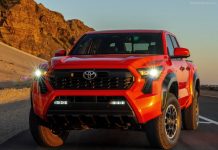
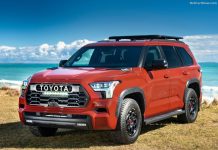
Brand-wise, Innoson was still the leader with a share of 44.1% (+175.3%), although GAC in 2nd reported the most impressive surge, up by 23 spots to a 12.1% share. Toyota ranked 3rd, growing 31% and with a 9.4% share.
Notably, Nord and Changan both emerged as new top brands into 7th and 8th respectively while Hyundai dropped 3 spots into 6th despite still growing 9.4%.
Looking at models, the Innoson Connect and the Innoson G20 Smart emerged several spots into 1st and 2nd with a share of 7.5% and 6.7% respectively. The 3rd spot also belonged to Innoson with the Innoson Mini Bus being displaced from top spot into 3rd.
EV Market Trend and Outlook
Nigeria’s EV market struggles to scale in 2026 as it remains constrained by lack of supportive infrastructure and by delayed government intervention. Still, the country’s automovie sector is considered to be particularly suited to include electromobility and so the trajectory for 2026 is expected to be an upward one.
GAC became the leader securing a share of 88.5% while Kia ranked into 2nd with 11.5%.
Medium-Term Market Trend
Nigeria’s vehicle market began in 2014 with 52,789 units, alongside the launch of the Nigerian Automotive Industry Development Plan, modeled after Brazil’s and aimed at encouraging local production. Despite issuing nearly 30 licenses within two years, the market collapsed by 68.5%, falling to just 10,446 units in 2017 due to the oil price crash and weak domestic demand.
A recovery started in 2018, with sales rising 68.7% to 17,625 units, encouraging some manufacturers to establish small assembly plants. However, the rebound was short-lived, as sales declined by 20.5% in 2019, reaching one of the lowest levels in a decade. The pandemic in 2020 delivered another setback, with lockdowns and a renewed oil slump causing a 34.7% drop in sales.
Since 2021, the market has shown steady but modest growth, increasing by 25.9% in 2021 and continuing upward for three consecutive years, reaching 13,320 units in 2023 (+23.5%), the strongest performance in four years. Growth continued in 2024 with a 15.6% increase, and in 2025 vehicle sales rose to 23,779 units, although overall volumes remain low for Africa’s most populous nation.