
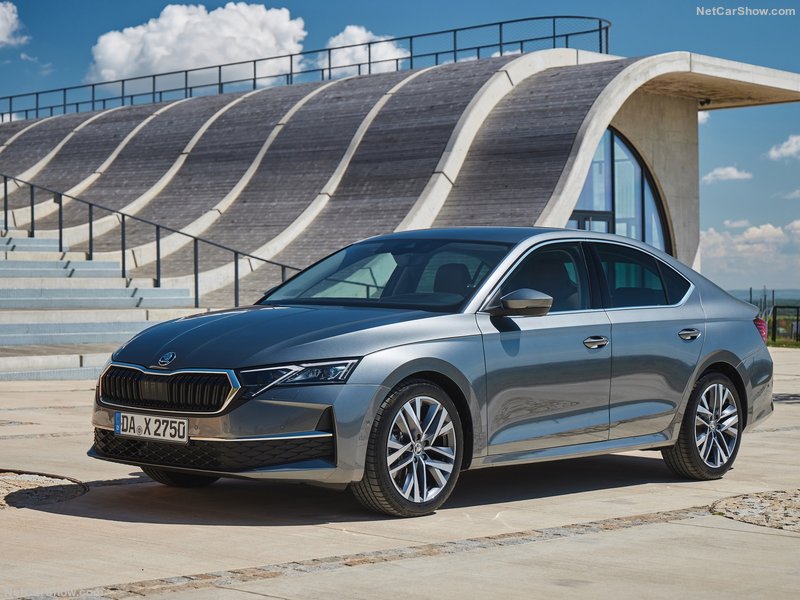
Croatian Car Passenger Market keeps growing steadily in 2024. November sales reached 3,921 (+15.1%) while YTD figures stood at 59,432 (+12.1%). Volkswagen lost its leadership and was overtaken by Skoda. Toyota notably grew 3 spots into 4th while Kia dropped 5 spots into 9th.
Market Trend and Outlook
The car passenger market in Croatia reflected the positive economic outlook and data from recent months confirm the momentum.
Sales in November reached 3,921 (+15.1%), while YTD figures stood at 59,432 (+12.1%) one of the best score in Europe this year.
Looking at cumulative data brand-wise, Skoda -up 1 spot- became the leader with 8,023 sales (+30.8%), followed by Volkswagen -down 1 spot- with 7,050 (+14.4%) and Renault with 4,364 (-23%).
Renault’s recent downturn could jeopardize its spot on the podium, as closest competitor gain traction. Indeed, in fourth place, Toyota -up 3 spots- sold 3,963 cars (+39.6%), while the 5th, Suzuki -up 1 spot- sold 3,774 (+20.8%) and the 6th, Opel -up 2 spots- with 3,482 (+37.6%).
Dacia dropped 2 spots and ranked in 7th with 3,278 sales (-6.7%) followed by Hyundai -up 1 spot- with 3,217 (+43.4%), Kia -down 5 spots- with 3,089 (-19.1%) and in 10th place Audi with 2,403 (+9.1%).
The best-selling car was the Skoda Octavia -up 1 spot- up 70.4% from the previous year, followed closely by Volkswagen T-Cross -up 7 spots- (+93.9%) and by the Opel Corsa -up 11 spots- (+131.4%)
Medium-Term Market Trend
The Croatian auto market from 2010 to 2013 presented an overall downtrend, falling 21.2% in 2012 and 17.1% in 2013 to 27,761 sales. From 2014 to 2019 the car passengers market continued to grow year by year reaching higher all-time highs 3 years in a row, finishing 2019 at a maximum of 61,999 sales.
The arrival of the pandemic in Europe strongly affected the Croatian market that fell 44.0% to 34,742 sales.
The drop in 2020 was not due to a structural problem in the industry in fact sales grew rapidly in 2021 reaching 45,283 new car registrations (+30.3%). In 2022 sales continued to increase but at a slower rate, with registrations by the end of the year reaching 44,082 (+2.7%). A combination of factors are behind the current industry struggle: the disruption in the global supply chain caused by a lack of raw materials, in particular for the production of microchips and Governments push towards Evs, an expensive alternative for low income consumers. Yearly figures of 2023 reached 56,679 while being up 28.6% from the previous year.
Tables with sales figures
In the tables below we report sales for all Brands, top 10 Manufacturers Group and top 10 Models.