Croatian Cars Market in 2026 bounces back. Q1 sales grew by 11.8%, turning positive in march after early-year slump. Among top brands, Opel reported the largest gains (+46.3%) while Kia dropped 9.6% and 3 spots into 10th.
Economic Environment
Croatia’s economic growth for 2026 will be moderate at around 2.7%, down from 3.2% in 2025, but still solid as the country continues converging toward OECD living standards. Inflation is expected to ease to about 3.3%, while unemployment remains low at roughly 4.8%. Fiscal policy will need to tighten, with the budget deficit projected near -2.9% of GDP and public debt around 56% of GDP, to rebuild buffers and manage long-term pressures.
Housing affordability is a growing issue due to high vacancy rates and short-term rentals, pushing up prices and limiting supply. The transition to a net-zero economy will require stronger action, including more renewable energy and reduced car dependency. Demographic challenges are significant, with the working-age population projected to fall by about 25% by 2050. This will increase the old-age dependency ratio from around 40% to 59%, putting pressure on pensions and healthcare.
Automotive Industry Trend and Outlook
After falling 10.1% in January and 4.3% in february, the croatian car market managed to end Q1 on an upward beat. In particular, about 16,738 units were sold, reporting gains of 11.8%.
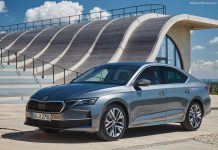
Brand-wise, Skoda was still leader with a share of 13.2% (+12.2%), followed by Volkswagen in 2nd (+11.2%) and Renault in 3rd (-4.3%).
In fourth place ranked Suzuki which also lost 1 spot (-9%), while Opel -up 4 spots- followed in 5th (+46.3%) and Toyota in 6th (-21.5%).
Dacia –down 2 spots- ranked 7th (-21.5%) followed by Hyundai -up 1 spot- in 8th (+11.9%), Audi -up 1 spot- in 9th (+11%) and in 10th -down 3 spots- place Kia (-9.6%).
Looking at models, the leader was the Skoda Octavia, growing 6.8% to a share of 5.2%. The Volkswagen T-Cross followed in 2nd, up 1 spot despite losing 4.2% as the Suzuki Vitara dropped into 3rd falling 7.3%.
EV Market Trend and Outlook
Croatia’s EV sector is on the rise, playing a moderate but stable role in the economy. Reaching a share of 9.5% while growing by 89.3%, the country’s ev import market has been growing rapidly, with most EV imports coming from nearby EU countries.
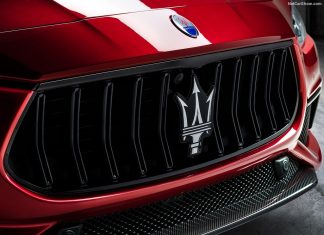
Suzuki led with 26.7% of the market while growing 24.3%, although Opel has shown an impressive surge, capturing 24.7% of the sector. Tesla closed the podium with an 8.8% share.
Medium-Term Market Trend
Between 2014 and 2024, Croatia’s car market almost doubled, growing from 33,953 to 62,931 units, supported by solid household consumption and steady GDP expansion. Although the pandemic triggered a sharp 42.8% decline in 2020, the market rebounded strongly in 2021 and continued to grow through 2024, despite a temporary dip in 2022. This upward trend extended into 2025, with total car sales reaching 68,580 units.
In contrast, EV adoption has been relatively slow, largely due to limited charging infrastructure and delays in policy implementation. While uptake started to show more noticeable progress in 2023, EVs still represent only a small portion of total sales. In 2025, EV registrations reached 4,090 units, compared to 4,536 in 2024, indicating modest but uneven growth. Looking ahead, stronger government incentives, increased EU funding, and ongoing investment in charging networks are expected to support further expansion of the EV segment. However, growth is likely to remain gradual until affordability improves and consumer confidence strengthens.
Tables with sales figures
In the tables below we report sales for all Brands, top 10 Manufacturers Group and top 10 Models.
This content is for members only.
Login Join Now