South Korean Vehicles Market in 2025 continues to expand. Full-year sales grew 2.7%, with Tesla and Renault Samsung being the standout in the top 10. EV growth was impressive, reaching a 10% share and surpassing outpacing Asian averages.
Economic Environment
Korea’s 2025 growth rates show modest improvement, with the economy gaining momentum despite lingering weaknesses. GDP growth has strengthened due to recovering private consumption and solid export performance, even as construction activity remains subdued. Inflation has stayed near the 2% target, supported by stable prices and softer oil costs, while employment grew mainly in government-influenced service sectors. Looking ahead to 2026, growth is expected to reach about 1.8% as domestic demand improves despite slowing exports under U.S. tariff pressures. Private consumption should rise 1.6% on lower interest rates and expansionary fiscal policy, while equipment investment grows around 2% on semiconductor strength.
Construction investment is projected to rebound into positive territory after a sharp 2025 contraction, and exports are expected to increase slightly by 1.3%. Inflation in 2026 is forecast at roughly 2.0%, with core inflation edging higher as demand recovers. Employment is expected to increase by about 150,000, reflecting moderate labor-market gains but demographic constraints. Risks remain elevated due to trade uncertainty, potential exchange-rate–driven inflation, and global economic slowdown concerns. Policy recommendations call for gradual fiscal normalization, steady monetary policy near current rates, continued financial-system vigilance, and structural reforms to counter declining potential growth.
Automotive Industry Trend and Outlook
Despite losses in the US, South Korea’s export is reaching decade-high in September. Moreover, exports of eco-friendly vehicles and domestic automobile sales are also touching highest figures in recent years.
After a negative performance at the beginning of the year, the market recovered and full-year sales gained 2.7% to 1,67 million units.
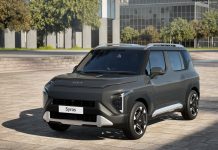
Brand-wise, Hyundai remained leader with a 35.5% share (+3.5%), followed by Kia in 2nd with 327%. Kia and Hyundai together make up 68.2% of the market.
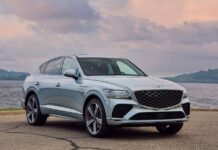
Genesis ranked in 3rd (-11.4%), followed by BMW (+4.6%), and Mercedes in 5th (+3.1%).
Tesla -up 2 spots- ranked in 6th (+101.4%), in front of Renault Samsung in 7th (+31.3%) and SsangYong -down 2 spots- in 8th (-14.4%).
Volvo -up 1 spot- secured 9th (+1%), in front of Lexus -up 1 spot- closing the Top 10 (+6.6%).
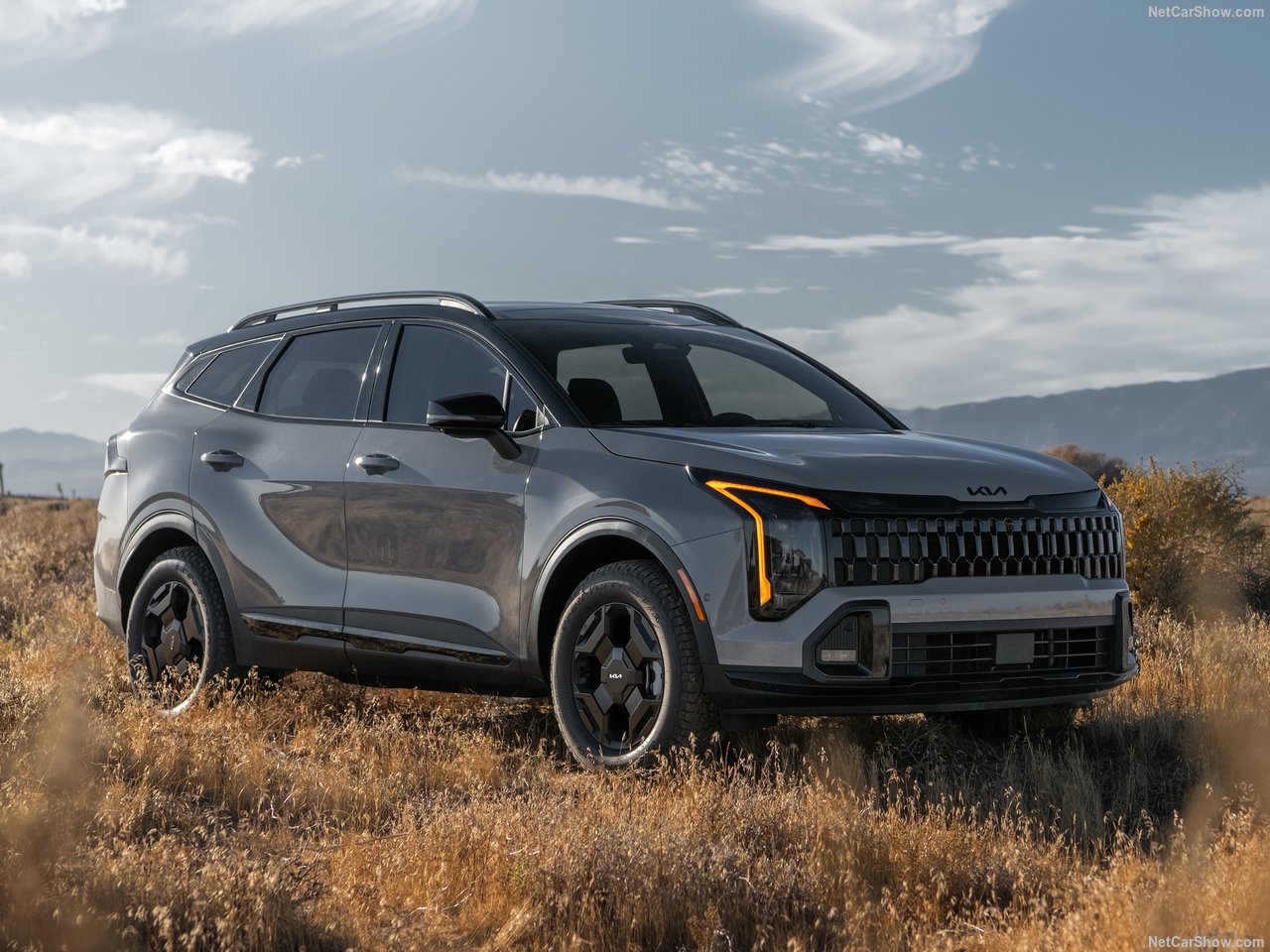
Looking at specific models, reported in the dedicated article, the Kia Sorento was still the best seller with a 5.8% increase in year-on-year sales. The Hyundai Avante boomed into 2nd with a 39.5% gain and climbing 7 spots.
EV Market Trend and Outlook
South Korea’s EV sector is expanding in 2025, despite sluggish performance in Q1. Full-year sales grew 52.2%, reaching a 10% share of the total. Some of the factors explaining the sector’s surge include the launch of new vehicles by leading carmakers, in particular the Kia EV3, and the system of government policies to support EV adoption.
Tesla was still the leader, up 89.5% with a 35.4% share. Kia followed in 2nd, impressively growing 93.6% while Hyundai fell into 3rd, up 44.3%.
Medium-Term Market Trend
South Korea’s automotive industry remained closed to foreign imports until 2012. The entry of new competitors drove market growth, peaking at 1.82 million sales in 2016. The market then remained steady until 2020 when COVID-19 incentives pushed sales up 5.8% to a record 1.87 million units. However, this push-pull effect, where incentives accelerated short-term demand, led to declines of 8.7% in 2021 and 2.4% in 2022, dropping sales to 1.66 million.
Despite high EV prices, slow adoption, and supply chain issues, the market rebounded in 2023, growing 3.2% to 1.72 million units, only to fall again by 5.7% in 2024 to 1.6 million.
South Korea’s EV market has been highly volatile. After peaking at 17,769 units in 2018, sales nearly halved in 2019 before surging nearly tenfold in 2021 and doubling in 2022 to 108,758 units. In 2024, EV sales declined 3.4% due to safety concerns, limited charging infrastructure, high battery costs, reduced subsidies, and competition from hybrids.
Tables with sales figures
In the tables below we report sales for all Brands, top 10 Manufacturers Group and top 10 Models.