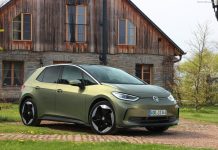

Belgium Car Market in 2026 is struggling. YTD sales up to February dropped by 13.2%, with last year’s leader BMW falling the most, -37.5% into 2nd. Among leading brands, Peugeot and Skoda managed to defy the headwinds.
Economic Environment
Brand-wise, Volkswagen moved up 2 spots into 1st with a 9.8% share (-8.2%), followed by BMW -down 1 spot- in 2nd with a 9.2% share (-37.5%).
Mercedes -down 1 spot- ranked 3rd (-8.1%) ahead of Peugeot -up 4 spots- in 4th (+18.8%), Renault up 2 spots- in 5th (-21.5%), Audi -down 1 spot- in 6th (-14%) and Dacia -down 3 spots- in 7th (-21.1%).
Skoda up 5 spots into 8th (-20.3%) followed by Toyota -down 3 spots- in 9th (-8.3%) and by Kia -down 1 spot- in 10th (-32.3%).
Looking at specific models, the BMW x1 was still at the top (+2%), followed by the Dacia Sandero -up 1 spot- into 2nd (+47.7%). The Audi Q6 climbed 18 spots in 3rd to close the podium (+131.5%).
EV Market Trend and Outlook
Despite broader contraction, Belgium’s EV market is surging, growing 11% up to February 2026 to a 15.6% share. Ev adoption is expected to grow throughout the year thanks to infrastructure expansion and fleet electrification.
Tesla retained the leadership with 22.3% of the segment despite losing 11.8%. Volkswagen followed in 2nd with 19.7% (+4.1%) while Mercedes climbed 2 spots in 3rd with 15.2% (+18.8%).
Medium-Term Market Trend
The car passenger’s market in Belgium was generally stable before the COVID-19 pandemic, fluctuating around the 500,000 units treshold and peaking at 549,607 units in 2018.
The arrival of the pandemic caused the market to collapse 21.5% in 2020. This fall in sales, would mark the Belgian market for the following years. In fact auto sales continued to fall, dropping another 11.2% in 2021 and 4.4% in 2022. Some of the factors that enhanced the crisis include increase in car prices that excluded low-income families from purchasing new vehicles as well as EU push towards EVs.
A rebound occurred in 2023, with sales increasing by 30.1%. However, in 2024, the market declined by 6% to 448,275 units, influenced due to factors such as the phasing out of certain tax advantages for ev models in the corporate sector.
EV adoption in Belgium has been on an upward trajectory. Starting from approximately 3,777 units in 2015, EV registrations grew to 10,301 units in 2017, and surged to 127,750 units in 2024, marking a 37% increase from the previous year. In 2024, battery electric vehicles accounted for 28.5% of the market share, overtaking plug-in hybrids
Tables with sales figures
In the tables below we report sales for all Brands and top 10 Manufacturers Group.